
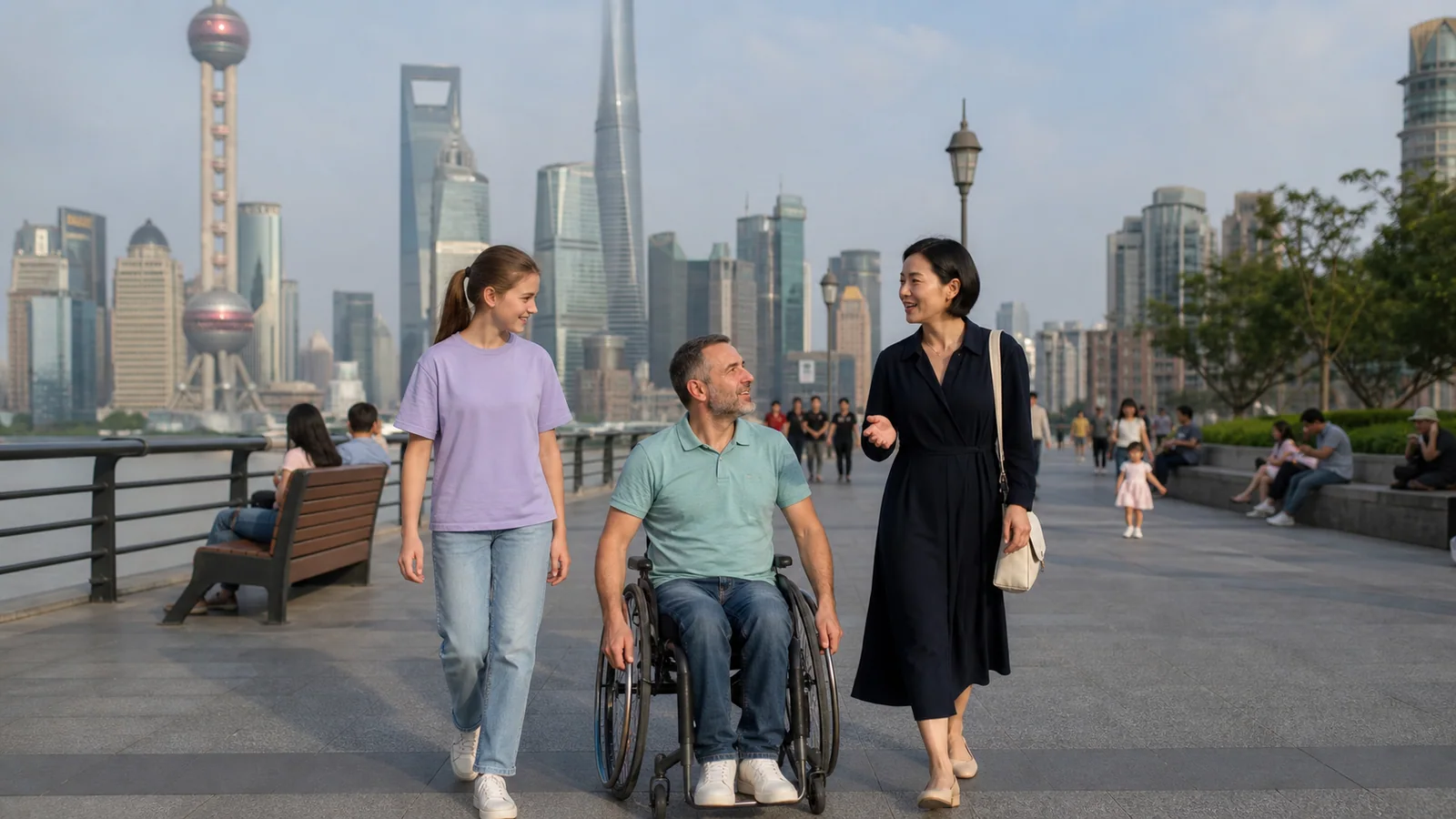
China can be rewarding for travelers with limited mobility, but accessibility is uneven and labels alone are not enough. The best plan checks the complete chain from aircraft seat to hotel room, vehicle and final attraction exit.
Confirm the difficult part first. Tickets, routes and vehicles should remove uncertainty from the journey, not add another layer to manage.
Describe the traveler, not only the wheelchair
Tell the operations team whether the guest can transfer into a vehicle seat, walk a few steps, manage stairs with help or remain in the chair. Share wheelchair type, folded dimensions, total weight and battery details for powered equipment. Explain what assistance is welcome and what is not. Independence and dignity matter, and staff should speak to the traveler directly rather than only to a companion.
A standard MPV with a wide sliding door may suit a traveler who can transfer. A passenger who must stay in the wheelchair needs a properly equipped accessible vehicle, which has more limited availability and must be confirmed city by city.
Request airport assistance before the flight
Arrange airline assistance when the ticket is booked and reconfirm close to departure. Provide battery information and ask how the chair will be handled. On arrival, the airport team may remain with the traveler through formalities and baggage, then meet the private coordinator at the designated public point. Share the assistance reference so the chauffeur does not wait at an impossible gate.

Ask five hotel questions in writing
Confirm step free entrance, elevator dimensions, room door width, bathroom turning space and the exact shower arrangement. Accessible can mean a grab rail beside a bathtub, which may not meet the guest’s needs. Ask for current photographs or measurements when the requirement is critical. Also check breakfast access and whether the vehicle can stop close to the entrance.
Build each attraction from gate to exit
Large modern museums and promenades often have strong routes, while historic sites may combine ramps, thresholds, cobbles and inaccessible upper levels. Ticket office, accessible entrance and final pickup may be in different places. Choose fewer sites, call ahead and keep a second option for lift maintenance or temporary closures. A guide should know the accessible route, not simply the attraction history.
High speed rail needs a station plan
China’s major stations can be enormous. Use the correct entrance, arrive early and request passenger assistance through the official channel when available. Wheelchair users may board through a managed route rather than the general queue. The arrival chauffeur needs the exact station, train number and accessible meeting point. Do not assume the shortest transfer on a map is physically possible.
Comfort is a pace, not a promise
Schedule bathroom breaks, rest and extra loading time without making the traveler feel like a delay. Avoid daily hotel changes when they add no value. Keep medication, repair tools, charger adapters and a translated mobility note in the cabin, not buried under luggage. Our role is to coordinate the moving parts honestly and confirm where specialist accessible equipment is available before accepting the journey.
Questions travelers ask
Is China wheelchair accessible?
Accessibility varies by city, venue and route. Many modern places work well, while historic sites need careful gate and surface planning.
Can a wheelchair fit in a China chauffeur vehicle?
Often yes, but the folded dimensions, weight, luggage and transfer ability must be checked before the vehicle is confirmed.
Are wheelchair accessible vans available in every Chinese city?
No. Specialist vehicles have limited local availability and must be confirmed for the exact city and date.
Current information to check
Review China Railway official service. Also review IATA guidance for passengers with disabilities. Opening hours, tickets, transport controls and operating procedures can change, so confirm them again close to travel.