
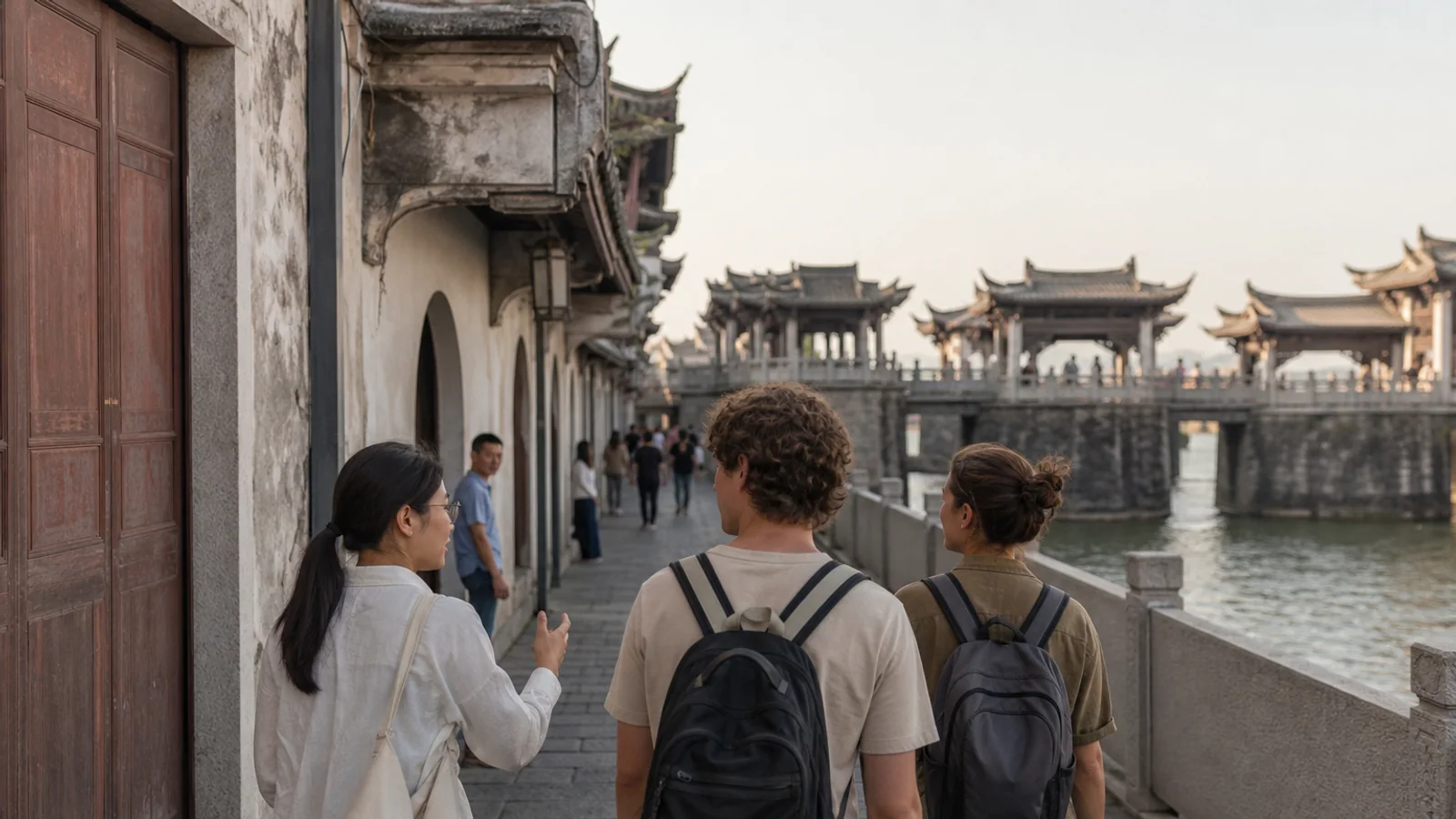
Chaozhou and Shantou share the wider Chaoshan culture but offer different experiences. Chaozhou is built around old lanes, temples, bridge history and craft. Shantou adds a modern port story, overseas connections and a coastal food city that rarely appears in first time China itineraries.
Confirm the difficult part first. Tickets, routes and vehicles should remove uncertainty from the journey, not add another layer to manage.
Arrive through the station or airport that matches the first city
Chaoshan Railway Station and Jieyang Chaoshan International Airport serve the wider region, but neither is the old center of Chaozhou or Shantou. Confirm the complete terminal and first hotel. A private vehicle is especially useful here because the strongest days combine compact walking districts with temples, villages, coast or restaurants in different directions. Start with two nights in Chaozhou, then move to Shantou instead of changing hotels every evening.
Send dietary restrictions before arrival. This is a food led journey, and the guide needs time to select kitchens that can respond clearly.
Day one: enter Chaozhou through the old city
Walk Paifang Street and its side lanes with a guide who can distinguish restored facades from active family shops. Continue to Kaiyuan Temple when open and approach Guangji Bridge with enough time to understand its combination of stone piers and movable boat section. Operating access and evening bridge arrangements can change. The bridge is not simply a sunset prop. Its relationship with the Han River explains trade and movement through the city.

Day two: craft, tea and one road extension
Use the second morning for a selected craft or cultural visit, such as wood carving, embroidery, ceramics or a carefully arranged gongfu tea session. Avoid workshops designed only to move guests toward a sales counter. Add Longhu Ancient Village or another nearby stop if current access and group interest fit. Guangdong’s official 2026 Chaozhou route highlights Longhu’s historic clan architecture and Guangji Bridge. Return for a measured dinner rather than crossing the region after dark.
Day three: move to Shantou through port history
Transfer to Shantou and begin around the old port district and Small Park area. Arcades, commercial streets and overseas Chinese connections reveal a different side of Chaoshan history. A local guide can explain why migration, remittances and trade shaped families across Southeast Asia. The historic center is best on foot, with the vehicle meeting at an outer point. End with seafood or beef according to the group, but do not order ten famous dishes for two people.
Day four: choose coast, island or deeper food culture
Nan’ao Island can create a scenic road day when weather and traffic are favorable, but it is not an automatic addition. Families may prefer a shorter coastal route. Food focused travelers can visit a market with a guide, then join a small cooking or tea experience. Business guests may use the day for nearby factories or family heritage research. Keep one theme. The final day should deepen the region rather than chase another set of online rankings.
Eat with curiosity and clear boundaries
Chaoshan cooking values ingredient quality, broths, seafood, marinated dishes, beef and precise condiments. Raw or lightly cooked items require personal judgment. Travelers with shellfish, peanut, sesame or soy allergies need a translated card and direct kitchen conversation. Halal, vegetarian and no pork requests should be discussed before the restaurant is chosen. Gongfu tea may be served repeatedly, so guests sensitive to caffeine can simply drink less. Hospitality does not require ignoring your own needs.
Questions travelers ask
How many days do Chaozhou and Shantou need?
Four days allow two nights in Chaozhou, a meaningful Shantou stay and one regional road day.
Is Chaozhou only a food destination?
No. Guangji Bridge, temples, old lanes, crafts, clan architecture and overseas connections make it a strong cultural journey.
Can dietary restrictions be handled in Chaoshan?
Yes, with advance planning. Send precise allergies and religious or vegetarian requirements before restaurants are selected.
Current information to check
Review Guangdong official Chaozhou heritage route. Also review Guangdong official Shantou visitor profile. Opening hours, tickets, transport controls and operating procedures can change, so confirm them again close to travel.