
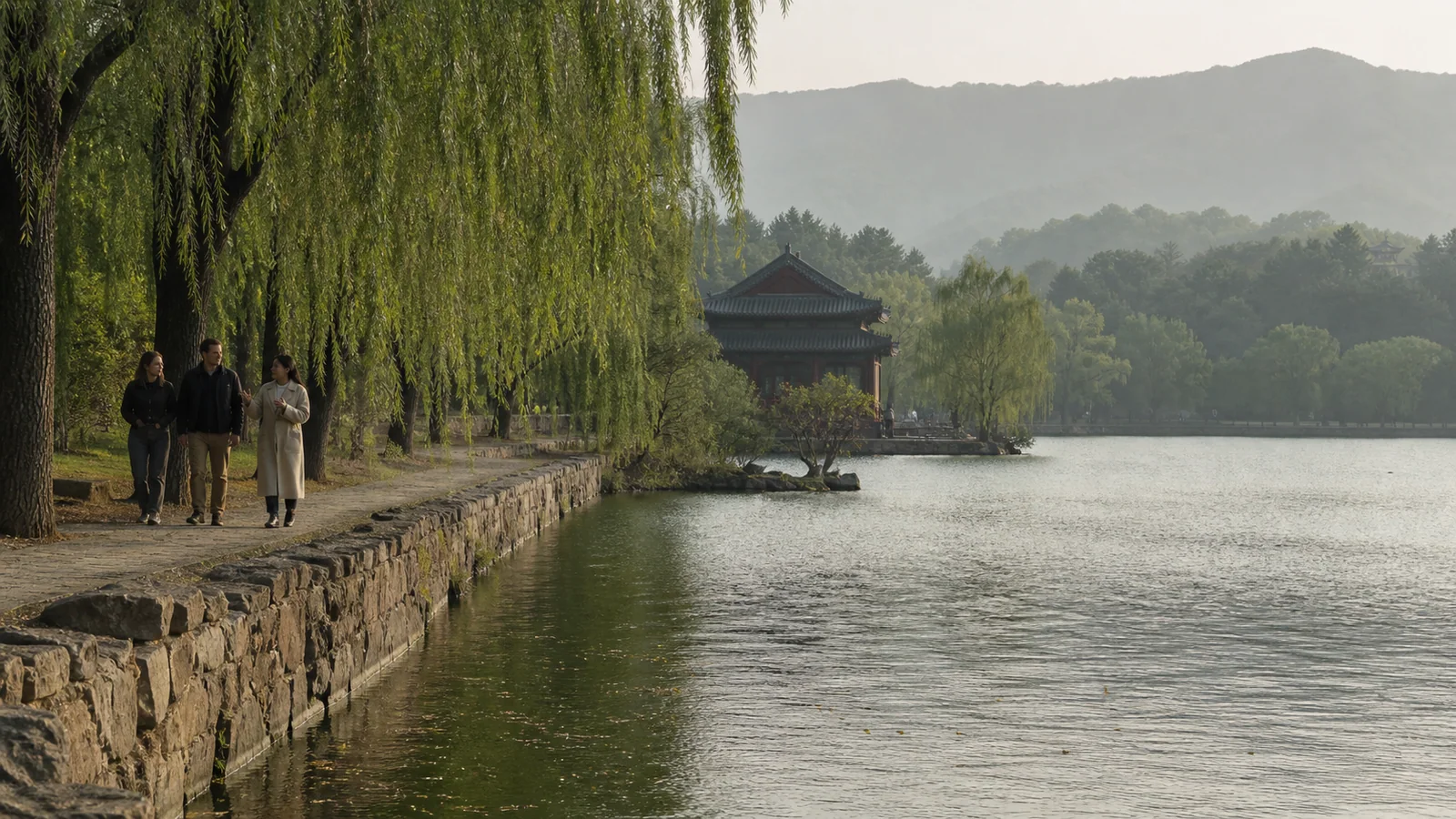
Chengde is close enough to extend a Beijing journey and different enough to deserve two days. Lakes, wooded hills and monumental temples show how the Qing court imagined a wider empire.
Confirm the difficult part first. Tickets, routes and vehicles should remove uncertainty from the journey, not add another layer to manage.
Why Chengde deserves more than a day trip
The Mountain Resort and its surrounding temples form a UNESCO World Heritage property, not one isolated palace. The resort contains lakes, plains, pavilions and wooded slopes inside a vast imperial landscape. Outside its walls, temples were built in architectural forms connected with Tibetan, Mongolian and Han traditions. A single rushed day usually reduces this layered place to a shuttle ride and two facades.
One night changes the rhythm. You can enter the resort before the main day groups, take a proper break and see a second temple without constantly checking the road back to Beijing.
Travel from Beijing with the overnight bag ready
Fast rail can be efficient, while a private vehicle gives families, older guests and travelers with luggage a direct hotel to hotel route. The road option also allows a stop selected for the season, but it should not become a collection of unrelated detours. Leave large cases in Beijing when possible and bring one compact overnight bag. Confirm whether the final day returns to a hotel, airport or another northern China city.

Day one: understand the Mountain Resort
Begin with the lake and palace areas while energy is fresh. The resort is too large to cover every corner on foot, and internal transport may help with distant sections. Choose a route based on mobility and interest. Garden design, court life and the change from formal buildings to open landscape matter more than checking every pavilion name. Stay into the softer afternoon light, then eat and sleep in Chengde.
Day two: choose two Outer Temples
Putuo Zongcheng Temple is monumental and rewards time for stairs, terraces and long views. Puning Temple offers a different religious and architectural experience. Other temples may suit a specialist interest, but opening conditions and restoration can change. Two meaningful visits are enough for most travelers. A local guide can explain the political context without presenting the buildings as copies of places elsewhere.
Choose the season honestly
Summer explains Chengde’s original role but brings heat and holiday crowds. Early autumn gives clear air and changing leaves. Winter is quiet, cold and visually spare, with shorter days and icy surfaces possible. Spring can be dry and windy. Carry layers, comfortable shoes and water. Public holidays need early hotels and entry planning because the compact modern city fills quickly.
Return to Beijing with a real margin
Do not plan the final temple and a fixed Beijing evening event back to back. Road and rail schedules can shift, and temple visits take longer when guests enjoy the architecture. A private chauffeur can hold luggage, connect the dispersed sites and return directly to the next hotel. The guide and driver should remain separate roles so each can focus on interpretation and movement.
Questions travelers ask
Is Chengde worth visiting from Beijing?
Yes. It offers a major imperial landscape and temple complex that feels very different from central Beijing, especially with one overnight.
Can Chengde be done in one day?
It is possible, but two days allow the Mountain Resort and selected Outer Temples without spending the entire visit watching the clock.
Which Chengde temples should first time visitors see?
Putuo Zongcheng and Puning provide a strong contrast. Current opening conditions should be checked before the route is fixed.
Current information to check
Review UNESCO Mountain Resort and its Outlying Temples listing. Also review China Railway official booking service. Opening hours, tickets, transport controls and operating procedures can change, so confirm them again close to travel.