
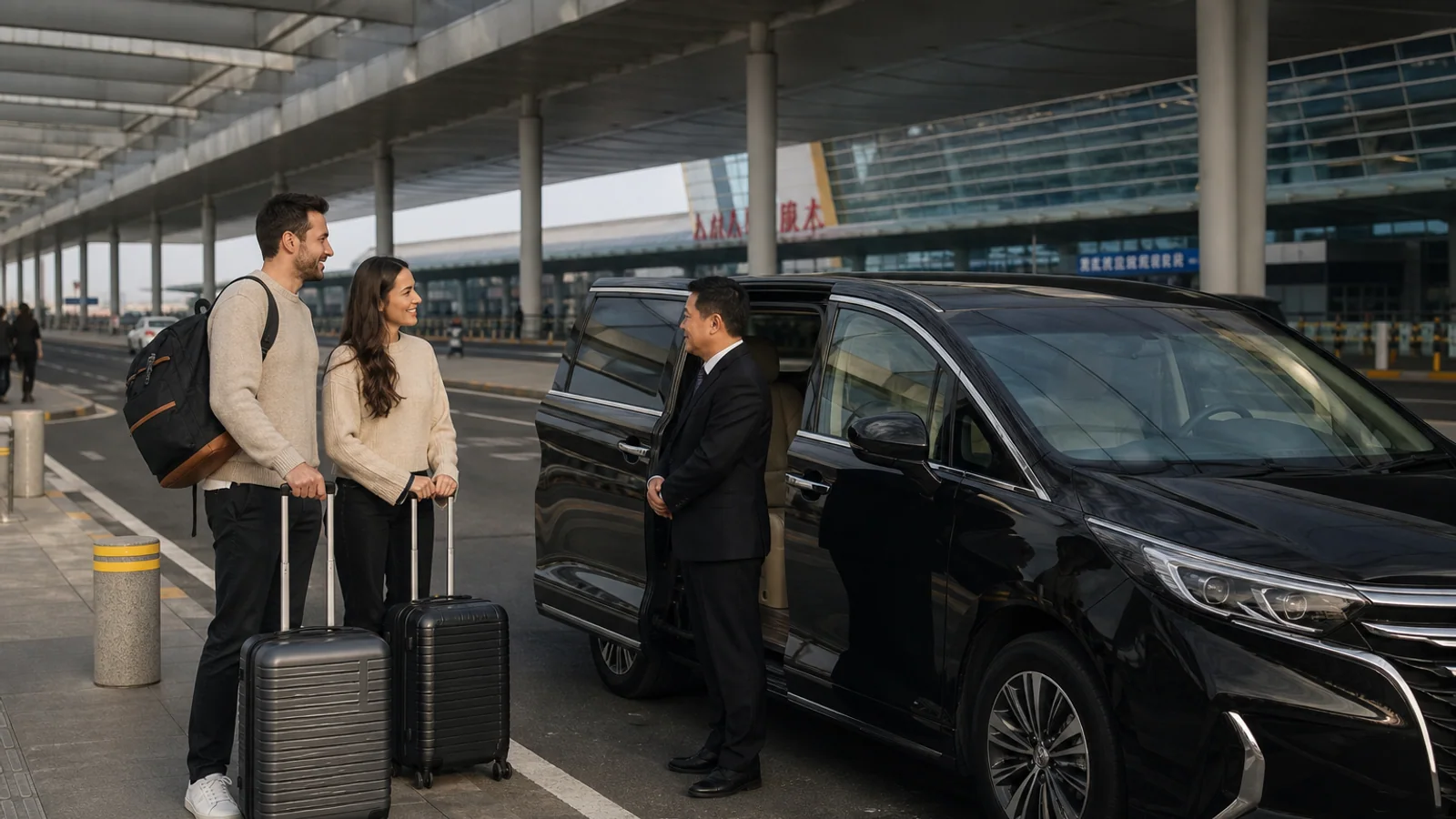
China’s high speed rail is easy to enjoy once the ground plan is precise. The most common problems happen before the train moves: a traveler is taken to the wrong station, reaches the wrong entrance or expects a chauffeur to wait where private vehicles cannot stop.
Confirm the difficult part first. Tickets, routes and vehicles should remove uncertainty from the journey, not add another layer to manage.
Confirm the complete station name in Chinese and English
Beijing, Shanghai, Guangzhou, Shenzhen and many regional cities have several passenger stations. “Shanghai station” can mean Shanghai Railway Station, Shanghai Hongqiao or another terminal. The difference may be an hour of road time. Send the ticket screenshot, train number and complete station name before the vehicle is dispatched. A reliable operations team checks the Chinese characters as well as the English translation, because two names can look almost identical to a first time visitor.
For a departure, the hotel address and train’s scheduled time shape the pickup. For an arrival, share the train’s origin too. It helps the coordinator verify that the train number and destination station agree. Never rely only on a map pin copied from an unofficial application.
Build time for security and finding the correct entrance
Large railway stations operate more like airports than neighborhood platforms. The passenger must reach a permitted dropoff, enter with the identity document connected to the ticket, pass security and find the waiting area for the correct gate. Some entrances are more useful than others, especially for business class lounges, accessible routes or a train departing from one end of a very long hall. A chauffeur can reach the curb, but normally cannot escort the passenger through every controlled area.
Leave earlier during public holidays, morning commuter periods and severe weather. A premium transfer protects the margin instead of promising an unrealistically late hotel departure.

Carry the original passport used for the ticket
China Railway’s official passenger information tells travelers to use the valid identity document supplied when the ticket was purchased. For most international visitors, that means the original passport. Keep it in hand luggage, not inside a suitcase already placed at the rear of a crowded vehicle. If a passport number changed after the booking, resolve the record before travel day. A photo of the passport may help the operations team check details, but it is not a substitute for the original document at controlled entry.
Choose the vehicle around railway luggage, not only passengers
Two people finishing a long China journey may have four large cases, shopping bags and hand luggage. A sedan that was comfortable on the first airport day may no longer fit. Share a current luggage count before each intercity transfer. Families should also mention a stroller or child seat, and business travelers should identify presentation cases or product samples. If porter assistance is essential, request it early because availability and access differ by station.
For arrivals, share the train number and expected exit
The chauffeur should monitor the scheduled arrival and wait at a legal point outside the controlled station. Trains can arrive on different platforms, and passengers may leave through several exits. Ask the traveler to send a message after leaving the train, then again when the exit sign is clear. The driver may need to approach from a holding area because station curbs do not allow long waiting. Walking to an unconfirmed street while the vehicle circles the terminal is the fastest way to lose the calm handoff.
Treat a railway connection as one complete movement
A hotel to station transfer, the train ticket and the arrival chauffeur should share the same date, passenger name and luggage facts. If the onward plan includes a meeting, scenic ticket or flight, expose the fixed time before the rail ticket is chosen. We work backward through station exit, road time and a practical delay margin. The result may be an earlier train, a different station or an overnight stay. Clear planning is more valuable than trying to recover an impossible connection after arrival.
Questions travelers ask
How early should I arrive at a Chinese high speed rail station?
It depends on the station, date and identity checks. Build time for curb access, station entry, security and finding the gate rather than treating departure time as the arrival time.
Can a private chauffeur meet me on the train platform?
Usually the practical meeting point is outside the controlled station area. Confirm an exact exit and keep one live contact after leaving the train.
Do foreign travelers need their passport for a China train?
Carry the original valid passport or identity document used to purchase the ticket. Keep it accessible throughout station entry and exit.
Current information to check
Review China Railway official passenger FAQ. Also review China Railway official booking service. Opening hours, tickets, transport controls and operating procedures can change, so confirm them again close to travel.