China is not impossible with a food allergy, but confidence should come from preparation rather than assumptions. A translated card, direct kitchen conversation and a simple backup meal can protect the day without removing the pleasure of eating.
Confirm the difficult part first. Tickets, routes and vehicles should remove uncertainty from the journey, not add another layer to manage.
Start with your medical plan at home
Speak with the traveler’s clinician before departure. Carry prescribed emergency medicine in hand luggage, keep it within temperature requirements and bring enough for delays. Know when and how it should be used. Travel companions should understand the plan. Insurance details, medical information and an emergency contact belong offline as well as on a phone. This article supports travel planning and does not replace medical advice.
Use a specific Chinese allergy card
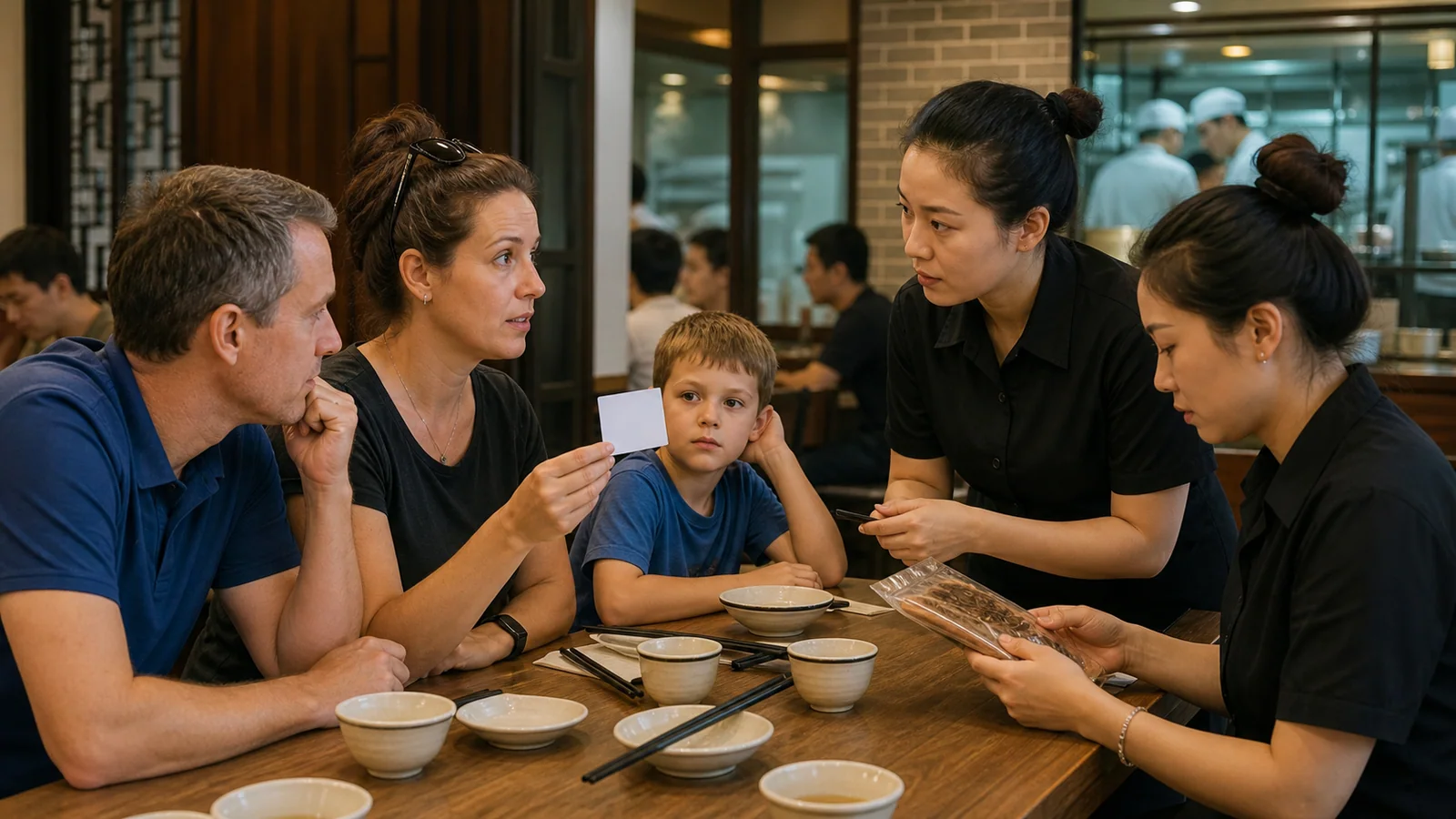
The card should name the exact allergen, explain that even a small amount or shared oil can be dangerous, and state what the kitchen must avoid. Machine translation alone can confuse peanuts with tree nuts, wheat allergy with preference or dairy allergy with lactose intolerance. Have a fluent speaker review the wording. Carry printed copies because a phone can lose power and should not be passed around a busy kitchen.

Cross contact is the difficult conversation
A dish may contain no obvious allergen and still use a shared wok, fryer, chopping board, sauce, stock or garnish. Sesame, peanut, soy, wheat, shellfish and egg appear in many forms. Ask about cooking oil, premixed sauces and broth. If staff are uncertain, choose something simpler or leave. Politeness does not require accepting an answer that feels unclear.
Make the hotel part of the safety plan
Tell the hotel before arrival and repeat the request at check in. Ask whether a chef can discuss a simple breakfast and whether sealed items can be stored. A room with a small refrigerator can help, but it is not a substitute for hygiene. Keep known safe snacks, fruit that can be peeled and a basic meal option for late arrivals. Never place all safe food in checked luggage.
Use one guide or coordinator who remembers
Repeating a serious history in every city is tiring. A private guide can call restaurants, show the card, ask follow up questions and help purchase packaged food. The guide must never promise that a kitchen is safe. The final decision remains with the traveler, and an unclear kitchen should be treated as unclear. Share the plan with the chauffeur so a restaurant change or pharmacy stop can be handled without stress.
Know what happens if symptoms begin
Follow the traveler’s prescribed emergency plan immediately and contact emergency services. Do not wait for a guide to debate whether the ingredient was present. Keep the hotel name and current address in Chinese, because the group may be away from the lobby. A private vehicle is not an ambulance. Staff should call the appropriate emergency service and help communicate the location while the traveler uses prescribed medicine as directed.
Questions travelers ask
Can I travel in China with a peanut allergy?
Yes, but preparation is essential. Carry prescribed medicine, use a reviewed Chinese allergy card and discuss shared oil and sauces directly.
Is a translation app enough for food allergies?
No. Use a carefully reviewed written card and a human conversation. Translation apps can support but should not carry the entire safety plan.
Can a private guide guarantee an allergy safe restaurant?
No one can guarantee a kitchen. A guide can communicate, call ahead and ask detailed questions, while the traveler makes the final decision.
Current information to check
Review Food Allergy Research and Education travel guidance. Also review Chinese Center for Disease Control and Prevention information. Opening hours, tickets, transport controls and operating procedures can change, so confirm them again close to travel.