
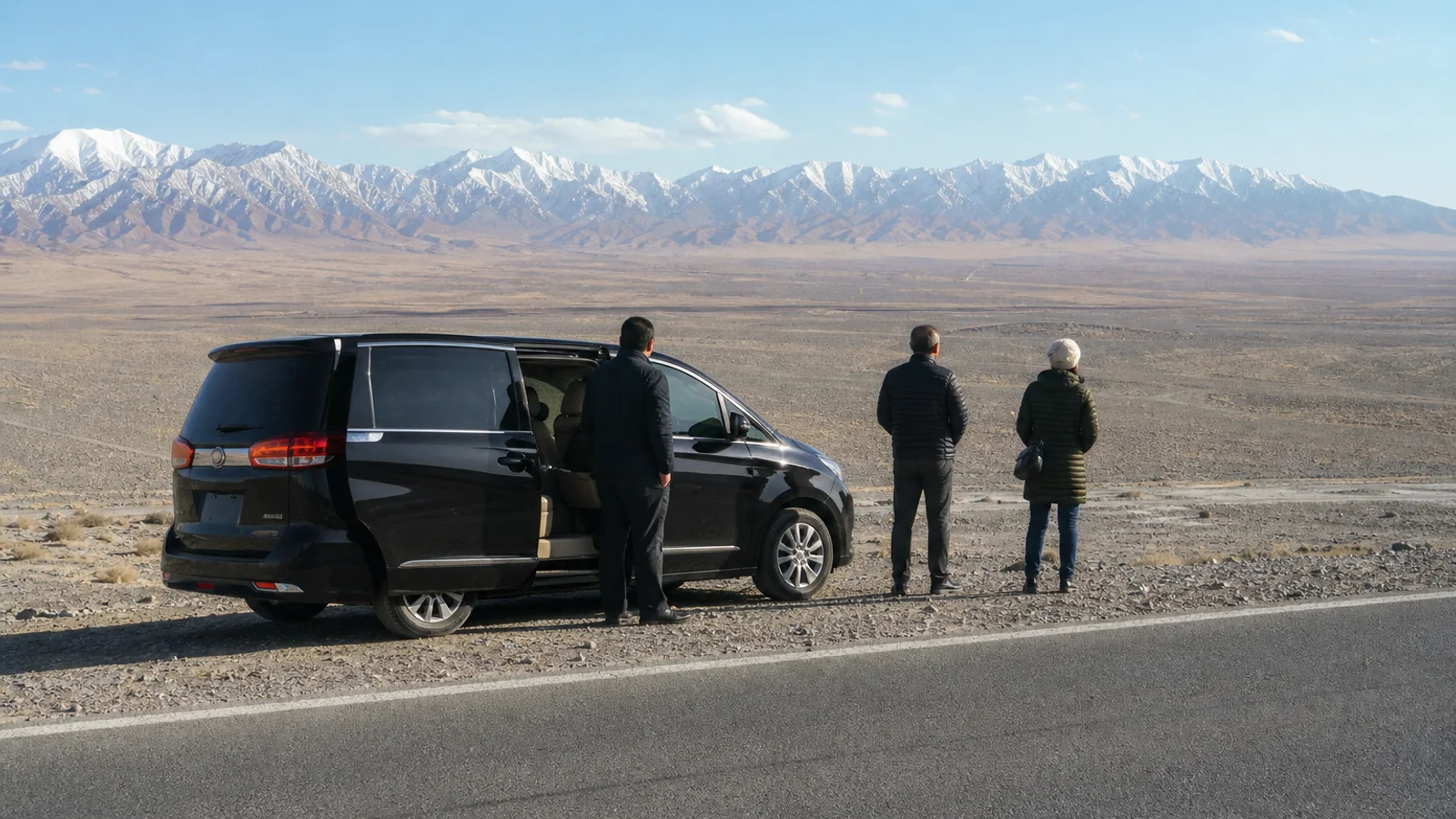
The Hexi Corridor is not a single desert drive. Zhangye, Jiayuguan and Dunhuang reveal geology, frontier history and Buddhist art across a vast line of oases and Gobi. Seven days give each place a proper anchor while using road and rail intelligently instead of turning every sunrise into a departure.
Confirm the difficult part first. Tickets, routes and vehicles should remove uncertainty from the journey, not add another layer to manage.
Day one: arrive in Zhangye and slow down
Reach Zhangye by air or rail and keep the first evening simple. The dry climate, time zone feeling and long onward distances deserve respect even though the official clock remains China Standard Time. Confirm the correct station because Zhangye West and other rail points are not interchangeable. Use the evening for dinner and a route briefing. If the flight or train arrives late, do not chase sunset at Danxia. The landform deserves a complete visit with current ticket and shuttle arrangements.
Day two: give Zhangye Danxia the right light
Visit Zhangye Danxia with enough time for the managed shuttle circuit and viewing platforms. Conditions change with cloud, rain and season. The famous layers can appear muted at noon and stronger later, but no operator can promise a perfect red sunset. Wear shoes for steps, carry water and follow barriers. The official Gansu route information identifies Zhangye as a core Hexi Corridor stop. A local guide adds geology and route control, while the chauffeur protects the hotel connection outside the scenic shuttle system.

Day three: choose one deeper Zhangye direction
Use the second Zhangye day for the Giant Buddha Temple, Mati Temple area or another selected experience according to interest and current access. Mati Temple adds grottoes and mountain scenery but creates a longer road day. The city heritage option is calmer for families and travelers continuing west. Do not collect distant attractions only because the corridor looks empty on a map. Real road time, altitude and visitor controls turn a small visual distance into most of a day.
Day four: move to Jiayuguan and understand the frontier
Travel by high speed rail or private road depending on schedule and desired stops. Jiayuguan Fort is the historical anchor, not just a wall photograph. Give the complex time for its gates, ramparts, museum and Gobi setting. Current ticketing and opening should be checked before arrival. Wind can be strong and shade limited. Stay overnight rather than treating the fort as a rushed platform between trains. The city also provides a practical break before the longer movement toward Dunhuang.
Day five: cross to Dunhuang without wasting the evening
Continue west by the most reliable current rail, air or road connection. The provincial tourism authority has promoted rail links across Zhangye, Jiayuguan and Dunhuang, but timetables change. A private road offers control and selected stops, while rail can reduce driver hours. Reach Dunhuang with time to settle. If weather and energy support it, use the evening for the local market or a gentle view, not a full desert program after a long transfer.
Days six and seven: separate Mogao from the desert
Reserve Mogao Caves through the official system and follow the assigned visit process. Passport details, ticket category and current cave access matter. Give this cultural day its own space. Use the other day for Mingsha Mountain and Crescent Spring, with heat, wind and walking considered. Sunrise and sunset plans should follow seasonal opening and safety rules. Finish from Dunhuang rather than driving the entire corridor backward. The strongest seven day route treats each place as a destination and lets the private team coordinate the joins.
Questions travelers ask
How many days do I need for the Hexi Corridor?
Seven days give Zhangye, Jiayuguan and Dunhuang meaningful time without making every day a long transfer.
Should I drive or take trains across Gansu?
A mixed plan often works best. Rail can reduce long transfer hours, while private vehicles handle local sites and luggage.
Do Mogao Caves tickets need advance booking?
Yes. Use the official reservation process and confirm passport details, visit category and current rules before travel.
Current information to check
Review Gansu Culture and Tourism Department 2026 Silk Road routes. Also review Zhangye government Hexi Corridor planning. Opening hours, tickets, transport controls and operating procedures can change, so confirm them again close to travel.