
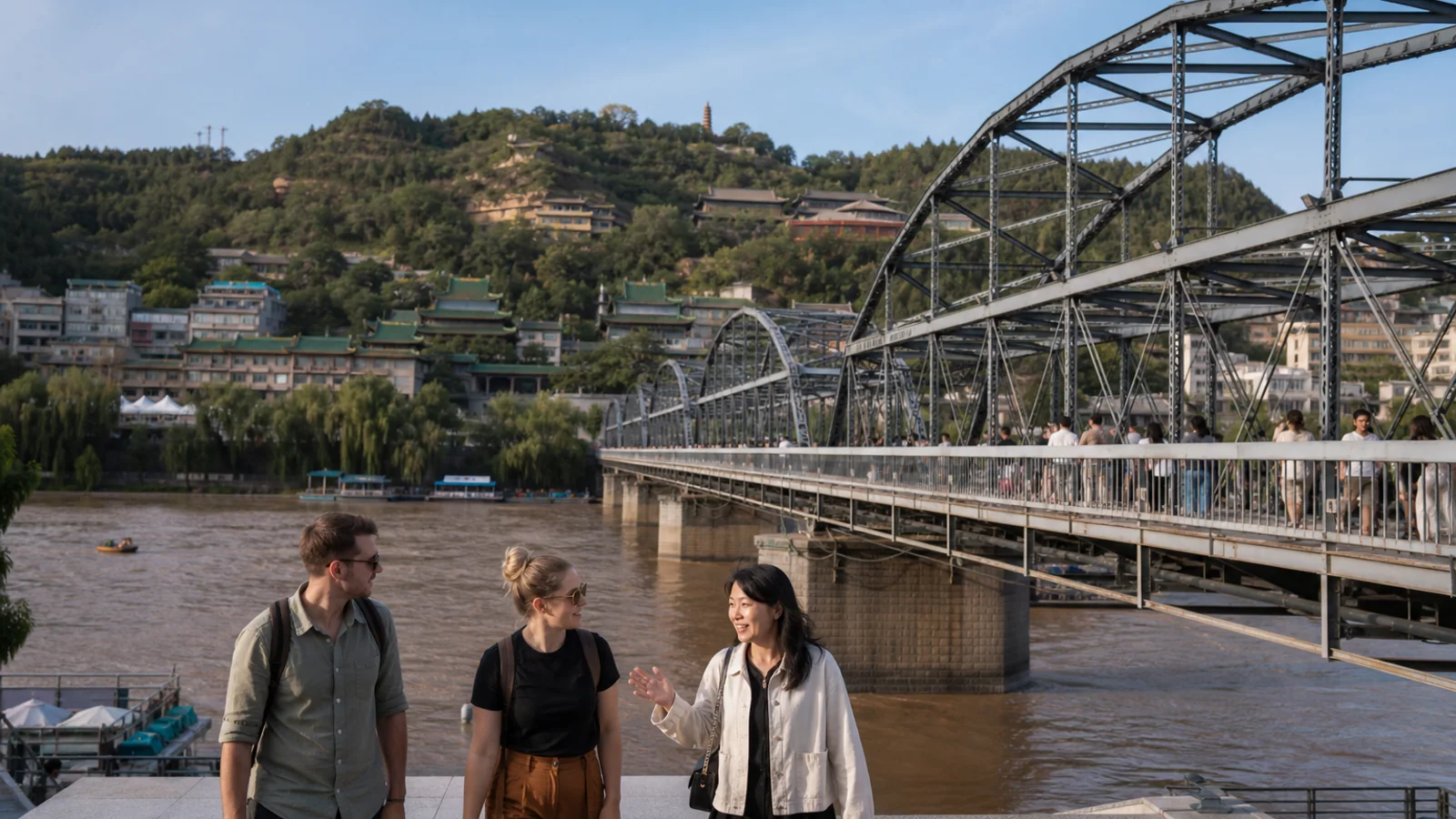
Lanzhou is more than an airport before the Hexi Corridor. The Yellow River passes through its center, beef noodles belong to breakfast rather than a tourist performance, and two days provide the context that makes later Silk Road sites easier to understand.
Confirm the difficult part first. Tickets, routes and vehicles should remove uncertainty from the journey, not add another layer to manage.
Day one begins with the correct Lanzhou terminal
Lanzhou Zhongchuan Airport sits well outside the central river districts. Lanzhou West and other railway stations require different pickups. Send the complete flight or train, then choose a hotel by the river or in a district that supports the next departure. Travelers continuing toward Zhangye, Jiayuguan, Dunhuang or Xiahe should not assume one station serves every route.
Walk the Yellow River as one connected story
Begin near Zhongshan Bridge and look across to Baita Mountain. The bridge was completed in the early twentieth century and has become part of a much older crossing story. Continue along selected river parks toward waterwheels, the Yellow River Mother sculpture or another section according to interest. The official Gansu profile connects the bridge, waterwheel heritage and ordinary riverside life, which is more useful than rushing between isolated monuments.

Use Baita Mountain only when the group wants the climb
The higher view helps explain Lanzhou’s narrow valley geography, but steps, heat and altitude can make it tiring. Confirm current access and use the easier route for older travelers. A river level walk may be more rewarding for anyone with limited mobility. Afternoon light often improves the relationship between the iron bridge, river and hills, while midday can be harsh in summer.
Day two starts with noodles, not a late lunch version
Lanzhou beef noodles are a morning habit. Choose a clean local shop and let the guide explain noodle widths, broth, radish, herbs and chilli. Travelers who avoid beef, gluten or strong spice need a separate breakfast plan. The kitchen moves quickly, so decide before reaching the counter. Photograph from your table rather than blocking cooks and local customers during the busiest period.
Choose one museum or craft stop for deeper context
Gansu Provincial Museum can introduce Silk Road exchange and regional archaeology when current opening and reservation rules permit. Give the strongest galleries time instead of attempting every room. Another option is a selected local craft or food experience arranged with a real host. Keep one indoor stop for very hot, cold or windy weather, because Lanzhou’s river valley climate can change the comfort of an outdoor plan.
Treat Lanzhou as the beginning of a longer road
Two days lead naturally toward Xiahe and Gannan by road, Tianshui by rail or the Hexi Corridor by air and train. These are not small city extensions. Match the next route with season, altitude, tickets and luggage. A rested chauffeur can handle a planned regional road, while rail may protect time across greater distances. The strongest itinerary uses Lanzhou to understand the river and then chooses one direction.
Questions travelers ask
Is Lanzhou worth two days?
Yes. Two days allow the Yellow River, city history, a local breakfast and Silk Road context before a longer Gansu journey.
When do people eat Lanzhou beef noodles?
Breakfast and morning are traditional and lively times. Shops vary, so ask a local guide to choose a clean, suitable place.
Can I travel from Lanzhou to Xiahe by private car?
Yes. It is a substantial regional road with higher altitude, so vehicle, driver hours and stops should be planned in advance.
Current information to check
Review Gansu official 2026 Lanzhou and Yellow River profile. Also review Gansu official Lanzhou bridge, river and noodle profile. Opening hours, tickets, transport controls and operating procedures can change, so confirm them again close to travel.