
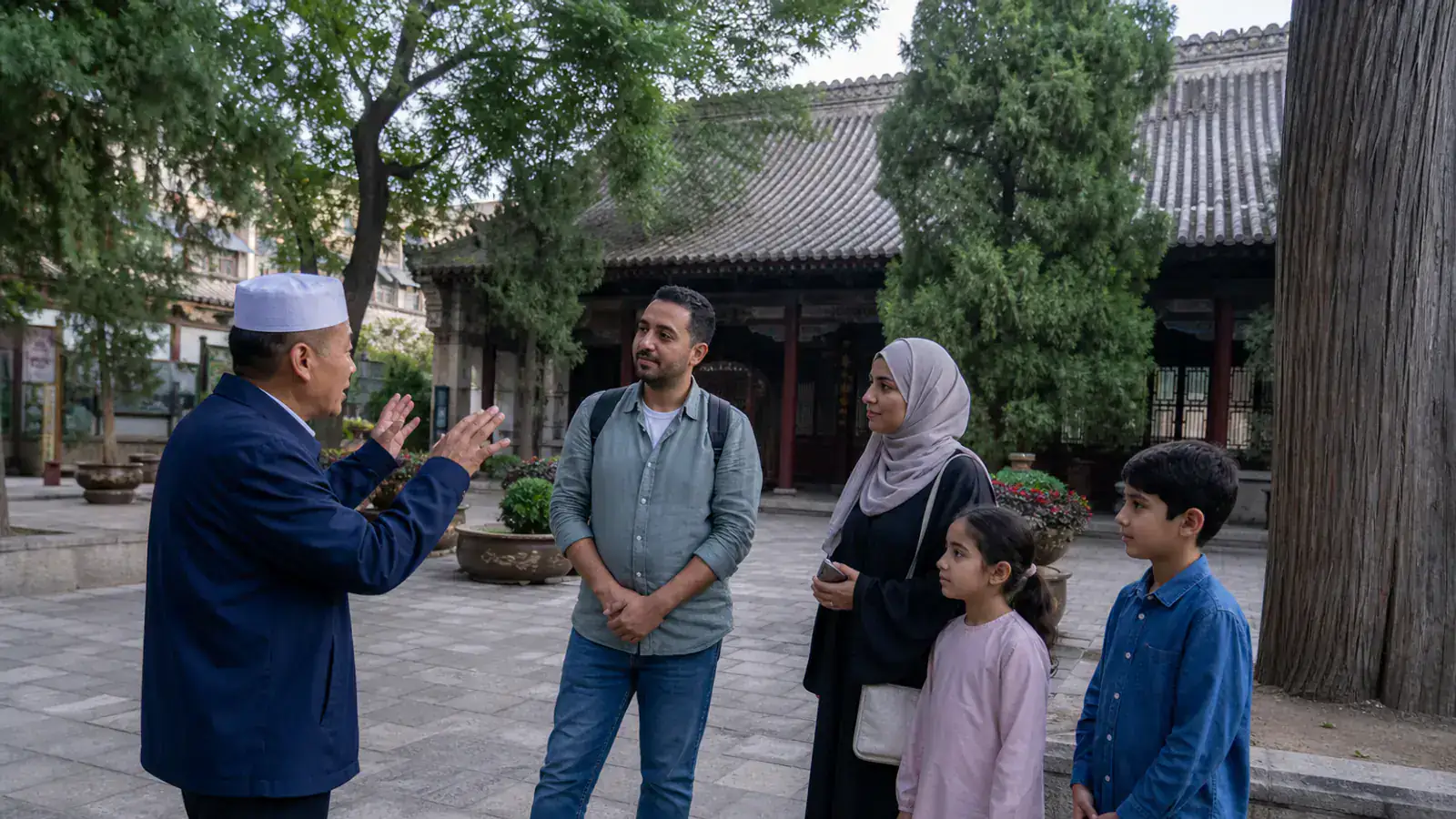
Muslim friendly travel in China is not created by adding one halal restaurant to a busy itinerary. It depends on clear food questions, realistic prayer stops, suitable hotel choices and a local team that understands why these details should be planned before the day begins.
Confirm the difficult part first. Tickets, routes and vehicles should remove uncertainty from the journey, not add another layer to manage.
Ask the kitchen, not only the map
A restaurant name or old online label is not enough. The guide should call, confirm the current kitchen and explain the group’s needs. Halal standards, shared cooking areas and menu ingredients vary. Some travelers need certified halal preparation, while others mainly avoid pork and alcohol. Tell us the requirement precisely so the guide can ask the right question instead of making a vague promise.
Choose routes with natural Muslim heritage
Xi’an has a historic Muslim quarter and the Great Mosque. Beijing, Shanghai, Guangzhou, Lanzhou and other major cities have established Muslim communities and dining options, though convenience differs by district. A route can connect Islamic heritage with China’s broader history without presenting local Muslims as a tourist display. Visits to active mosques should remain quiet and respectful.

Build prayer time into movement
Prayer is easier when the day has margin. A private vehicle can return to a hotel, reach an agreed mosque or stop at a suitable private place according to the traveler’s practice and local conditions. The guide should never invent mosque access or interrupt worship for sightseeing. On long road days, discuss timing before departure and carry a clean travel prayer mat if useful.
Ramadan changes energy and meal timing
During Ramadan, early departures, fasting, children and older travelers require an honest pace. Confirm suhoor with the hotel, identify iftar before the afternoon and avoid placing a difficult mountain climb late in the fasting day. In China, most businesses operate normally during Ramadan, so the private plan must carry the timing rather than expecting the city to change around the group.
Send the details that change the answer
Before we propose the route, send cities, prayer preferences, halal standard required, allergies, Ramadan dates, children, older relatives and the preferred daily pace. These details determine the airport, vehicle, guide, daily timing and hotel geography. They also expose conflicts early. A stroller may change the vehicle. A late flight may remove a first day. A factory address can shift the useful hotel district. We would rather simplify the plan before confirmation than explain an avoidable problem after arrival.
Where private coordination earns its value
The useful service here is an Arabic speaking travel desk, local guides who call restaurants, private transport, planned prayer margins and one clear update channel. Private travel does not remove ticket rules, traffic or local access controls. It creates one accountable plan around them. The passenger, chauffeur, guide and hotel receive the same current timing. When a flight, meeting or family need changes, one desk updates the people affected instead of asking the traveler to rebuild the day in several languages.
The mistake that costs the most time
Avoid guaranteeing that a restaurant is halal without current confirmation or assuming every Muslim traveler follows exactly the same practice. Search results often make distant places look adjacent and complex services look interchangeable. A clear written plan should name the operating flight or train, exact pickup, passenger and bag count, included service and the person to contact. Simple decisions made early protect more time than adding another attraction later.
Questions travelers ask
Is halal food available in major Chinese cities?
Yes, but choice and standards vary. Confirm the current restaurant and kitchen before relying on it.
Can prayer stops be included in a private itinerary?
Yes. Share the preference early so daily routes include realistic time and locations.
Does every chauffeur speak Arabic?
No. Our travel desk can communicate in Arabic, while local chauffeurs and guides are assigned according to the city and service.
Current information to check
Review China official inbound tourism development plan. Also review China official payment guide for overseas visitors. Opening hours, tickets, transport controls and operating procedures can change, so confirm them again close to travel.