
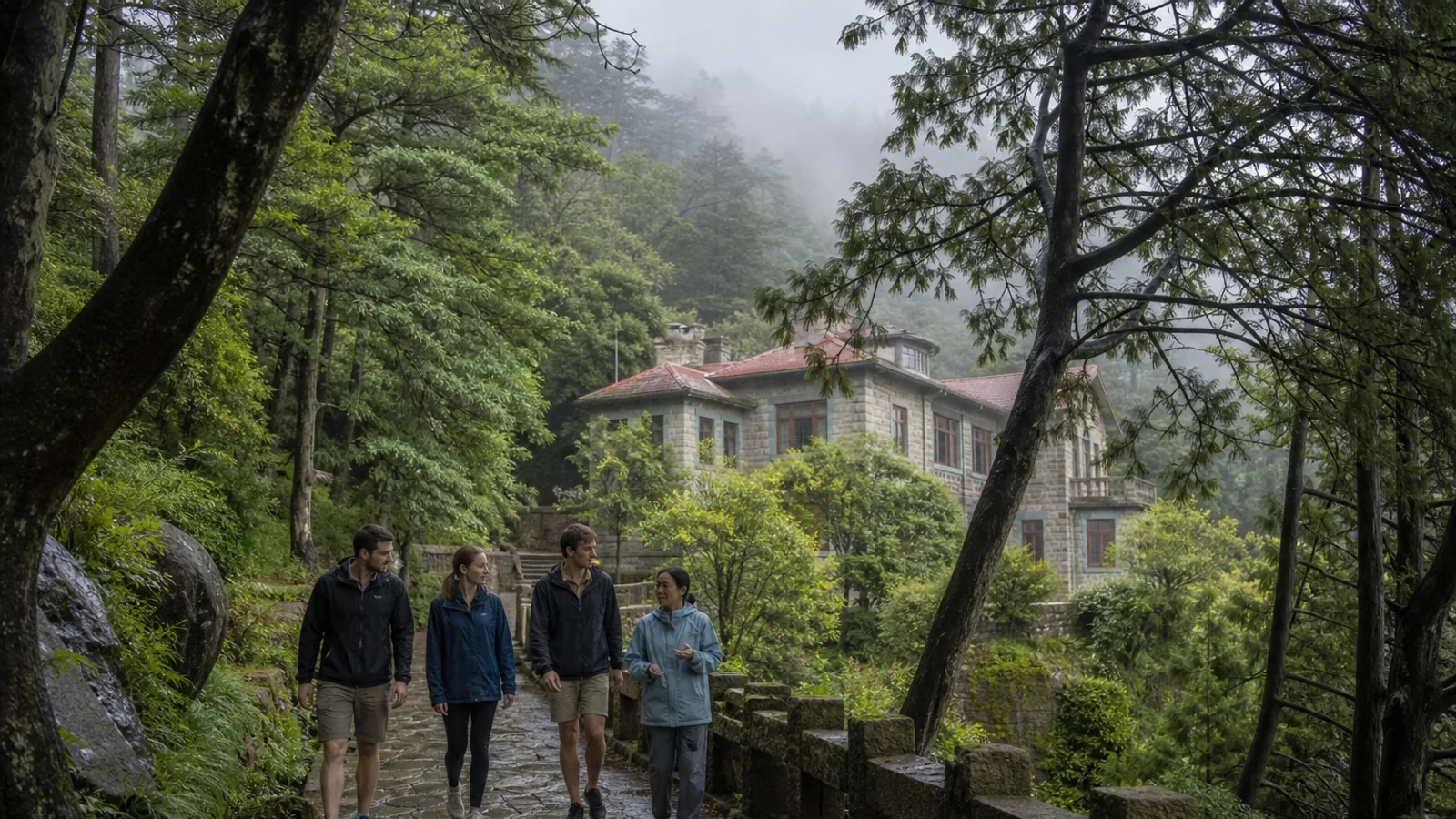
Nanchang and Lushan form a thoughtful Jiangxi route. Tengwang Pavilion begins beside the Gan River, then Lushan brings temples, academies, villas, forest and mist into one cultural landscape that has shaped Chinese art and thought for centuries.
Confirm the difficult part first. Tickets, routes and vehicles should remove uncertainty from the journey, not add another layer to manage.
Day one: arrive and begin beside the Gan River
Confirm whether the train uses Nanchang West, Nanchang Station or another terminal. Transfer to a central hotel and visit Tengwang Pavilion according to current hours and ticket access. The present structure is the twenty ninth version in a history of repeated rebuilding. Its importance comes from literature, river geography and cultural memory, not a claim that every visible surface is ancient.
Walk part of the riverside or a selected historic district, then rest. Starting the mountain road after a late arrival produces a weaker first day on Lushan.
Day two: choose the correct Lushan gateway
Lushan is in Jiujiang, not a city park outside Nanchang. Rail to the appropriate station and a local road transfer can be efficient, while a private vehicle from Nanchang may suit a family with luggage and a flexible stop. Scenic traffic controls change by season. Confirm whether the operating plan allows the vehicle to reach the hotel or requires official internal transport. Pack a smaller overnight bag if transfers become easier.

Read Lushan as a cultural landscape
UNESCO describes Lushan as one of the spiritual centres of Chinese civilization, where Buddhist and Taoist sites, Confucian learning and natural scenery meet. The mountain includes more than two hundred historic buildings, many inscriptions and later villas. A guide should connect selected places rather than deliver a list. White Deer Cave Academy or Donglin Temple may require a different road direction from the Guling core, so choose around interest and time.
Let mist change the route without ruining it
Cloud can close the long view and deepen the forest, stone and villa atmosphere. Keep one exposed viewpoint flexible and one sheltered cultural route ready. Wear shoes with grip and carry a light waterproof layer. Waterfalls depend on recent rain, while heavy rain can close paths. Follow official safety notices. Do not cross barriers to recreate a photograph from clearer weather.
Day three: one mountain morning, then a safe departure
Begin with the strongest route for that morning’s visibility and group mobility. Older travelers may prefer villas, flower paths and shorter walks. Strong hikers can add a longer trail only when transport and weather permit. Return to Nanchang or continue through Jiujiang with a conservative connection. A tight evening flight creates pressure on scenic transport and mountain roads.
Choose the season for the experience you value
Summer has the history of a mountain retreat and can be busy. Spring brings moisture, flowers and mist. Autumn often offers clearer colour, while winter can be quiet and cold with limited services. Every season needs current opening checks. A private journey is valuable because the vehicle, guide, hotel and rail can respond as one plan when the mountain changes the day.
Questions travelers ask
Can Mount Lushan be visited from Nanchang?
Yes. Use rail plus local transfer or a planned private road. The exact gateway and scenic traffic rules should be confirmed for the season.
Is three days enough for Nanchang and Lushan?
Three days work for a Nanchang arrival and two mountain days. Add another night for deeper academy, temple or hiking routes.
What happens if Lushan is covered in mist?
Use forest, villa and cultural routes, then keep exposed viewpoints flexible. Mist is part of the landscape, not necessarily a failed day.
Current information to check
Review UNESCO Lushan National Park cultural landscape profile. Also review China Government official Tengwang Pavilion profile. Opening hours, tickets, transport controls and operating procedures can change, so confirm them again close to travel.