
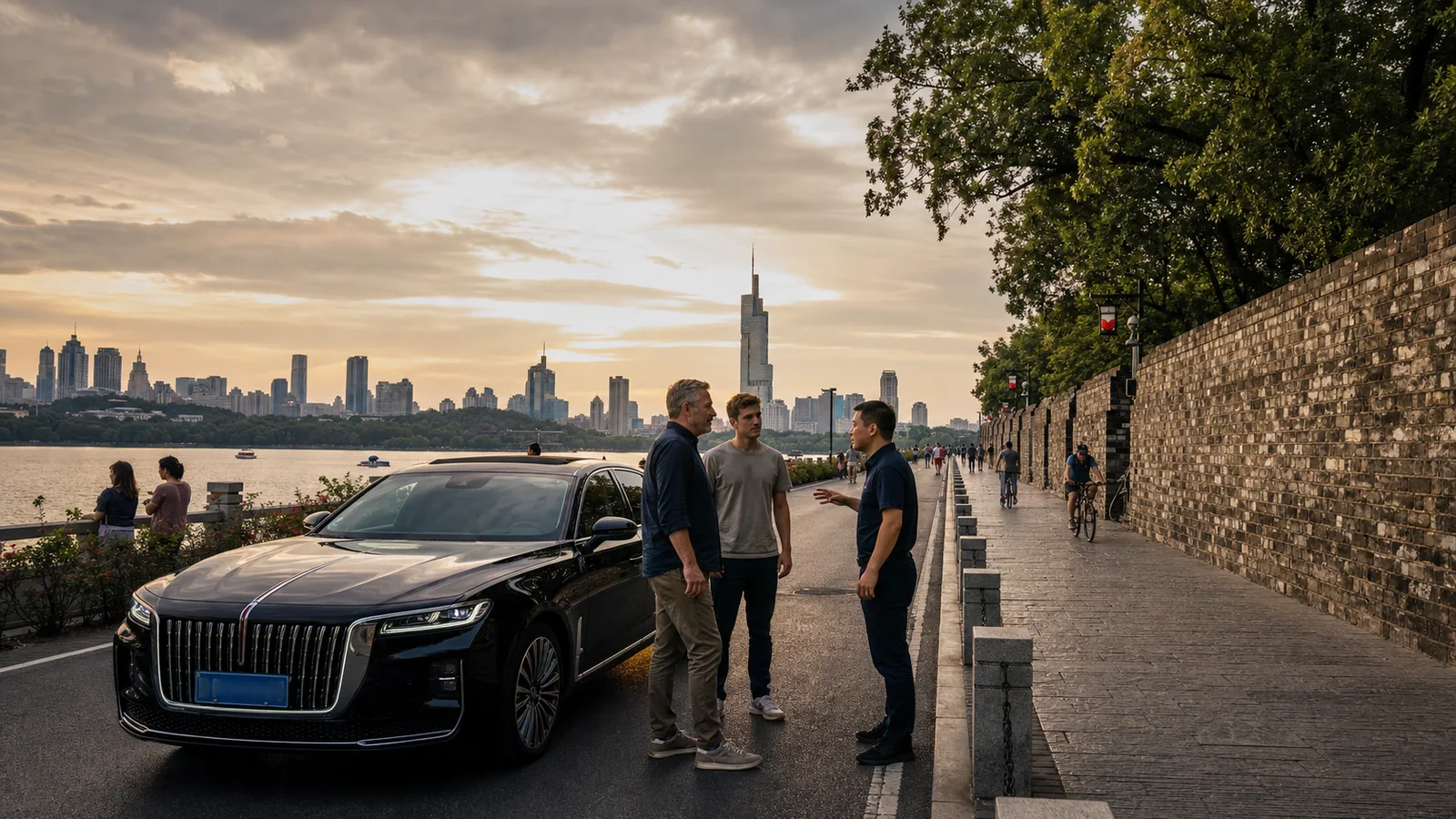
A short Nanjing visit succeeds when the route respects distance and emotional weight. Keep Purple Mountain together, choose the central history that matters most and allow the Qinhuai River to become an evening rather than a quick photograph.
Nanjing served as a capital under different periods and carries several stories at once. A local guide helps connect the Ming dynasty, the Republic of China, the city’s painful twentieth century history and the modern provincial capital around you.
Two full days work well from Shanghai by rail or private car. If the trip includes business in Jiangsu, Nanjing can also be placed before Suzhou, Wuxi, Yangzhou or a factory visit.
Day one: Purple Mountain and the Ming legacy
Begin in the Zhongshan Scenic Area while the air is cooler. The Ming Xiaoling Mausoleum and its stone spirit path introduce the scale and landscape thinking of imperial burial architecture. Mature trees and seasonal color make the walk part of the experience.
Continue to the Sun Yat-sen Mausoleum if it fits the group’s historical interests and current access rules. The long staircase and large visitor flow require time. Senior travelers may prefer a shorter route and more use of official site transport where available.
Choose one additional place in the area, not three. Linggu Temple, music stages or another garden can complete the morning. A long lunch and hotel rest are better than crossing the city for an unrelated attraction at peak traffic.
In late afternoon, visit a quieter neighborhood or enjoy a meal built around Jiangsu flavors. Nanjing salted duck is the best known local dish, while seasonal vegetables, river products and delicate soups show another side of the cuisine.
Day two: city walls, a museum and the Qinhuai River
Start at a surviving section of the Ming city wall or near Xuanwu Lake. The wall gives a physical sense of Nanjing’s historical size and provides a clear view of how the old city meets modern buildings.
Select one principal museum or memorial for the middle of the day. Nanjing Museum offers broad collections. The Presidential Palace focuses on a different period. The Memorial Hall of the Victims in Nanjing Massacre by Japanese Invaders is deeply important, but it should never be treated as a casual stop squeezed between entertainment.
If the memorial is chosen, allow time and approach it with respect. Consider a quiet break afterward. Families should decide in advance what is appropriate for younger children.
Finish around the Confucius Temple and Qinhuai River district. The busiest lanes can be commercial, but a guide can explain the area’s examination, literary and urban history. Stay into the evening when lanterns and water create a different mood.
Do not force every museum into two days. One well guided historical visit will stay with you longer than three rushed entrances.
When Nanjing looks its best
Spring brings flowers and fresh green. Autumn is especially attractive around tree lined roads and Purple Mountain. Summer can be intensely hot and humid, while winter can feel cold even when temperatures look moderate.
Rain changes walking conditions on stone steps and walls. Keep indoor options available, but do not abandon the whole visit because of light rain. Gardens and old trees can look beautiful in softer weather.
Arriving from Shanghai
High speed rail is efficient, but confirm which Nanjing station and which Shanghai station appear on the ticket. Arrange pickup with the train number, carriage if known and a reachable phone.
A private road transfer is useful for families, substantial luggage or an itinerary that stops in another Jiangsu city. Driving time varies with the exact addresses and traffic. Door to door comfort must be weighed against rail speed.
Car, guide and accessibility
A premium sedan suits one or two visitors. An MPV provides easier entry and more comfort for a family, business group or senior travelers. Tell the team about wheelchairs, walking sticks and steps before the route is confirmed.
The driver manages parking and transfers. The guide joins the site visits and explains the history. Confirm working hours, overtime, extra kilometers, parking and any guide admission in the quotation.
How to extend the journey
Add a third day for more museums, a deeper republican history route or a slower garden visit. Continue to Yangzhou for gardens and cuisine, or return toward Suzhou and Shanghai.
Business guests can combine Nanjing with a factory or office visit, but share the full address in Chinese. Industrial zones can be far from the historic center and need separate timing.
Frequently asked questions
Are two days enough for Nanjing?
Yes. Keep one day around Purple Mountain and one around the central wall, a chosen museum or memorial, and the Qinhuai River.
Can I visit Nanjing from Shanghai?
Yes. High speed rail works well for a short visit. A private road transfer is convenient for families, luggage or a route with additional Jiangsu stops.
What is the best season for Nanjing?
Spring and autumn are especially pleasant for outdoor sites. Summer is hot and humid, while winter requires warm layers.
Should I hire a guide in Nanjing?
A guide adds significant value because the city’s imperial, republican and modern histories overlap. The chauffeur and guide perform different roles.
Official information to check
Review Nanjing’s official travel information and its current scenic spot guidance. Check opening days and reservations with each site.