
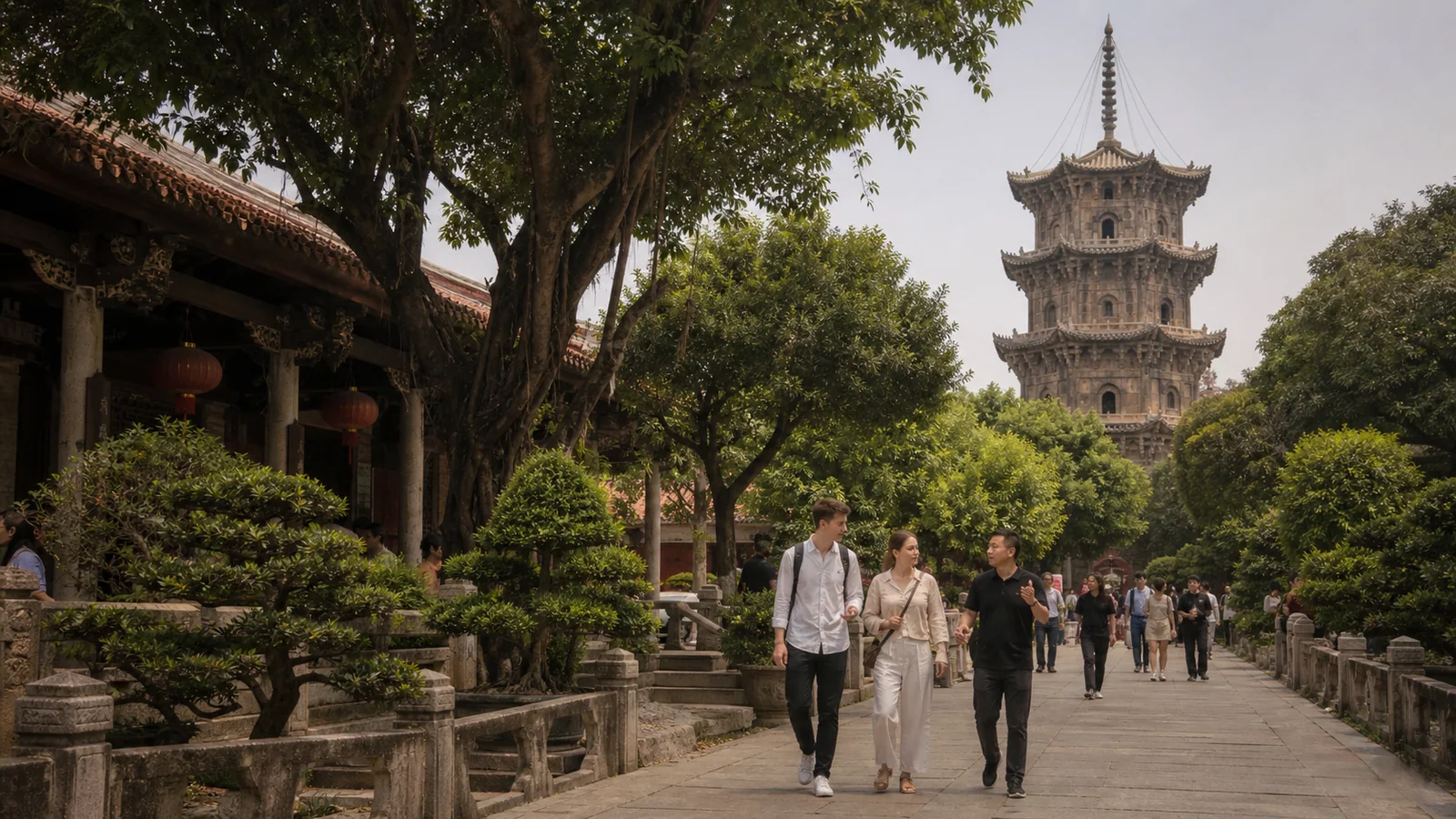
Quanzhou was one of the world’s great maritime trading ports. Its strongest three day route connects Buddhist, Muslim and folk religious heritage with bridges, docks, food and neighborhoods that still feel lived in.
Confirm the difficult part first. Tickets, routes and vehicles should remove uncertainty from the journey, not add another layer to manage.
Begin with the city as a network
UNESCO inscribed Quanzhou: Emporium of the World in Song Yuan China as a serial property with 22 component sites. That matters because no single monument explains the port. Administrative buildings, religious sites, production areas, bridges and maritime infrastructure worked together. Plan the city in connected themes rather than treating the UNESCO list as a race.
Quanzhou rewards curiosity. A small shrine, old shopfront or bowl of noodles may explain daily exchange more clearly than another wide photograph of a gate.
Day one: Kaiyuan Temple and the historic center
Start at Kaiyuan Temple before the busiest hours, allowing time for both stone pagodas and the quieter details inside the complex. Continue through the old center on foot, then visit Qingjing Mosque and nearby streets that reveal the city’s religious range. Dress respectfully and remember that active religious spaces are not studio sets. End with local food rather than a distant attraction.

Day two: trade, belief and objects
Use the second day for sites that explain commerce and maritime movement. A museum visit gives context to shipbuilding, ceramics, inscriptions and overseas communities. Add selected temples or guild related places according to current access. A guide who understands the port’s history can connect Arabic, Persian, Indian and Southeast Asian links without turning every foreign object into a dramatic legend.
Day three: Luoyang Bridge and the coast
A private vehicle makes the wider landscape possible. Walk part of Luoyang Bridge at a safe tide and look at how stone, oyster foundations and estuary conditions shaped the structure. Continue toward a coastal village, harbor or another component site chosen for current access. Keep the route focused. Coastal traffic and tidal views do not follow a city center schedule.
Eat like a port city, with a little help
Quanzhou’s food draws on seafood, noodles, broths, fried snacks and sweet flavors. Ask a local guide to select places for the group’s diet and comfort rather than chasing a viral queue. Travelers with shellfish, peanut or sesame allergies need a written Chinese card and a direct kitchen conversation. Vegetarian requests should clarify whether stock, oyster sauce or lard can be used.
Use walking and driving for different jobs
The historic core is best experienced on foot, with the vehicle meeting at a sensible outer point. The bridge, coast and dispersed heritage sites need a car or MPV. This mix avoids repeated parking while keeping the third day efficient. Xiamen can connect by rail or road, but Quanzhou deserves its own hotel instead of becoming a rushed add on between airport transfers.
Questions travelers ask
How many days are enough for Quanzhou?
Three days provide a strong balance of historic center, museums or religious heritage, and one road journey to the bridge and coast.
Why is Quanzhou a UNESCO World Heritage site?
The serial property brings together 22 sites that show how a major Song and Yuan period maritime trading center functioned.
Can Quanzhou be visited as a day trip from Xiamen?
Yes, but a day trip only introduces the center. Staying in Quanzhou gives more time for the coast and the city after day visitors leave.
Current information to check
Review UNESCO Quanzhou World Heritage listing. Also review Quanzhou Municipal Government English information. Opening hours, tickets, transport controls and operating procedures can change, so confirm them again close to travel.