
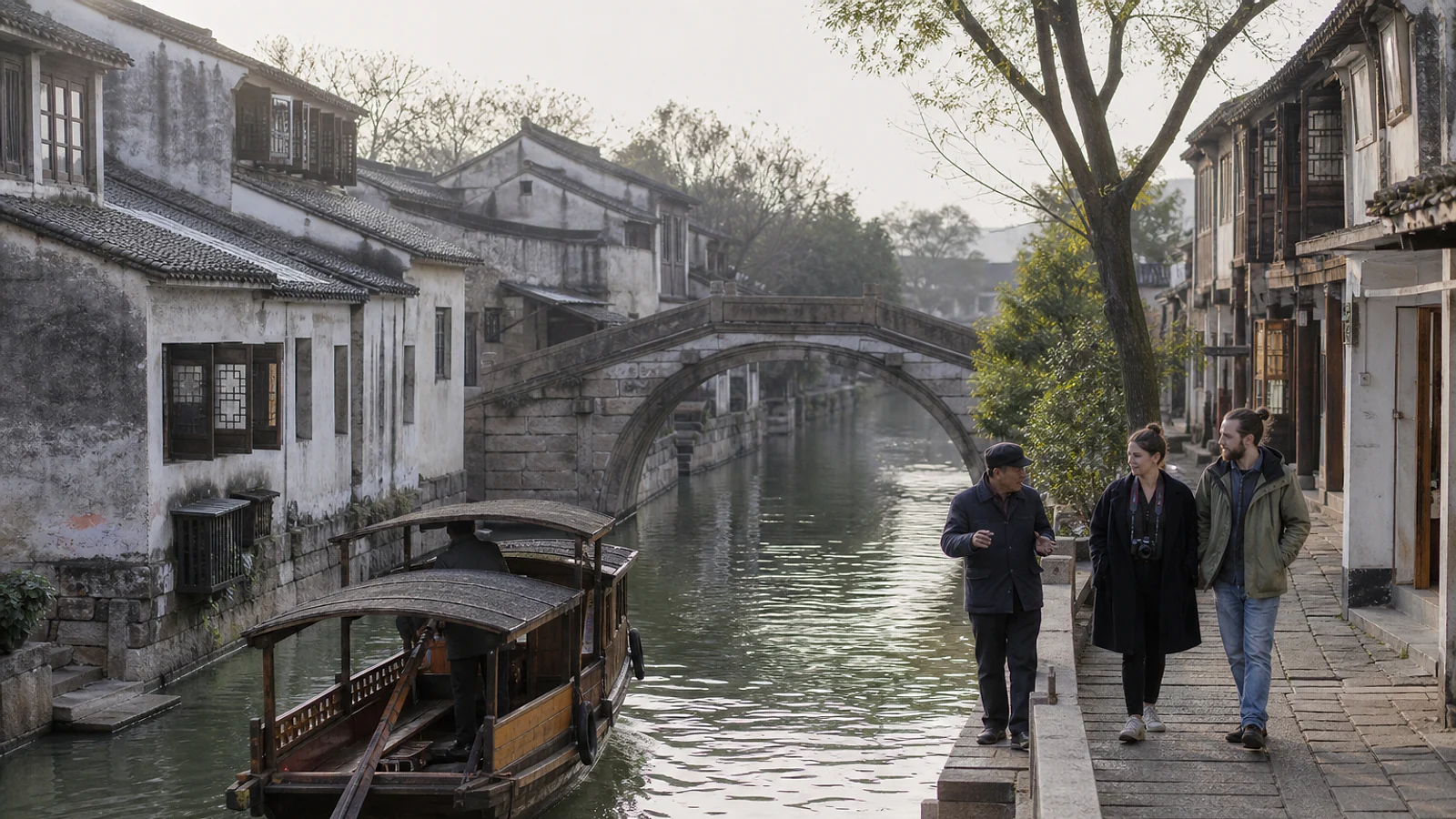
Search for a water town near Shanghai and the names begin to blur: Zhujiajiao, Wuzhen, Nanxun, Tongli, Xitang and Zhouzhuang. Photographs show similar bridges, white walls and narrow canals. On the ground, the experience is not the same.
The right choice depends on time, tolerance for crowds and whether you want architecture, an easy escape or an atmospheric night. This guide focuses on three towns that solve three different travel needs.
The short answer
When you have half a day
It is the closest practical old town to central Shanghai and Hongqiao. Go early, walk beyond Fangsheng Bridge, take a short boat only if the queue is sensible and return for an evening in the city.
When history matters most
Silk wealth produced libraries, gardens, family compounds and a notable meeting of Chinese and European design. Baijianlou adds a quieter canal neighborhood with a lived scale.
When you can stay overnight
Xizha is highly managed and often busy, yet the controlled lanes, waterways and evening light create the most complete overnight visitor experience of the three.
Do not collect water towns. One town explored from morning to late afternoon gives more than three hurried entrance gates.
Zhujiajiao: the efficient Shanghai escape
Zhujiajiao sits in Qingpu District and is connected to Shanghai’s urban transport network. That makes it the strongest choice after a Hongqiao arrival, during a ten hour layover or when the group wants to sleep in the same Shanghai hotel.
The center around Fangsheng Bridge becomes crowded first. Begin on quieter lanes, then enter the busiest area after shops and food stalls open. Kezhi Garden, small temples, post office history and canal boats can fill a half day, but the pleasure comes from walking rather than stacking paid attractions.
Inbound visits rose strongly in 2025 according to Shanghai’s official reporting. The town is no longer a secret for international travelers. Early timing matters more than pretending to find an empty bridge.
Nanxun: the town with the deeper architectural story
Nanxun grew rich through silk. Its merchant families built places that do not fit a simple water town stereotype. Little Lotus Villa, Jiaye Library and former residences combine Jiangnan planning with selective European influence. A guide can connect rooms, gardens and family histories that otherwise become a row of attractive doors.
Baijianlou is the visual release. Long rows of houses sit close to the canal, stone bridges break the line, and ordinary domestic details remain visible. Walk it in the morning or late afternoon. Respect doorways and residents before composing a photograph.
Nanxun works as a private day from Shanghai, but the road is longer than Zhujiajiao. It also pairs logically with Wuzhen over two days. Do not attach Suzhou to the same day unless the aim is to spend most of the journey in a vehicle.
Wuzhen: the strongest evening, with the most management
Wuzhen is divided into visitor areas, with Xizha providing the broadest managed experience. Tickets, accommodation, internal boats and pedestrian access are organized at scale. That creates convenience and beauty, but it also means the town can feel curated.

Arrive after lunch, check in, walk when day visitors begin to leave and stay through blue hour. Sleep inside or close to the scenic area, then use the quieter morning before departure. This pattern gives Wuzhen a reason to be chosen beyond one perfect night photograph.
Confirm whether the hotel is inside the controlled area, where the vehicle stops and how luggage is transferred. A romantic room on a canal can include stairs, humidity and street noise. Ask practical questions before choosing from photographs.
Three routes that make sense
Six to eight hours: Zhujiajiao only
Leave central Shanghai after the morning peak, spend four hours walking and eating, then return before dinner. From Hongqiao, it can also become a comfortable arrival day. Keep luggage in the vehicle rather than dragging cases over stone bridges.
One full day: Nanxun
Depart early. Start with Baijianlou while the lane is calm, then move into the historic compounds and gardens. Have a local lunch, allow tea time and return to Shanghai without adding another gate.
Two days: Nanxun and Wuzhen
Visit Nanxun from morning through mid afternoon, continue to Wuzhen, check in and stay for the evening. Explore Wuzhen again the next morning, then return to Shanghai or continue to Hangzhou. This is the best route for guests who want both history and atmosphere.
What perfect canal photographs leave out
Stone lanes become slippery in rain. Popular bridges can be crowded. Boat queues may be longer than the ride. Summer heat and humidity change the walking pace. Some scenic areas feel quiet at 08:00 and completely different at 11:00.
Not every old looking building is untouched. Restoration, tourism businesses and modern services are part of these towns. Ask what is original, what has been adapted and what remains residential. Honest context makes the visit more interesting, not less beautiful.
Day trip or overnight?
Stay overnight for Wuzhen. Consider it for Nanxun if photography, quiet mornings or slow travel matters. Use Zhujiajiao as a day trip unless it is part of a special local event or the hotel itself is the purpose.
Families and older travelers should ask about steps, elevators, bathroom layout and the walk from vehicle access to reception. An elegant heritage room can be less comfortable than a modern hotel just outside the pedestrian zone.
Train, metro or private car
Metro access makes Zhujiajiao possible independently. The final walk and transfers still matter if you have luggage, a child seat or a fixed airport schedule. Nanxun and Wuzhen can use rail plus local transfers, but a private car becomes valuable when two towns, an overnight bag or a continuing Hangzhou journey are involved.
A chauffeur handles the road and luggage. A guide handles architecture, local stories and conversation. For a simple canal walk, use only the service you need. For Nanxun’s family compounds or a first cultural journey, the guide adds much more value.
When to go
Spring gives fresh green plants and soft rain. Early autumn is often comfortable. Summer requires shade, water and a slower middle of the day. Winter is quieter and visually clean, but damp cold beside canals can feel stronger than the temperature suggests.
Avoid national holiday peaks when possible. If dates cannot move, reserve hotels and timed attractions early, begin before the main arrival wave and accept that a famous town will look famous.
Questions travelers ask
Is Zhouzhuang missing for a reason?
No. Zhouzhuang is important and beautiful, but this comparison focuses on the easiest Shanghai half day, the strongest historical day and the best managed overnight.
Can a water town fit an airport layover?
Zhujiajiao can fit some long Hongqiao layovers. International airport timing, immigration, luggage and return security must be calculated conservatively. Pudong Airport usually makes the detour much less practical.
Which town is best with children?
Zhujiajiao is simplest for a short family visit. Wuzhen is easiest for an overnight with organized facilities. Use a child carrier carefully because many lanes and bridges have steps.
Current information to check
Use Shanghai’s official Zhujiajiao day guide and its 2026 visitor update. For Nanxun, review Zhejiang’s official account of its silk and architectural heritage. Confirm current tickets and hotel access directly with each scenic area before travel.