
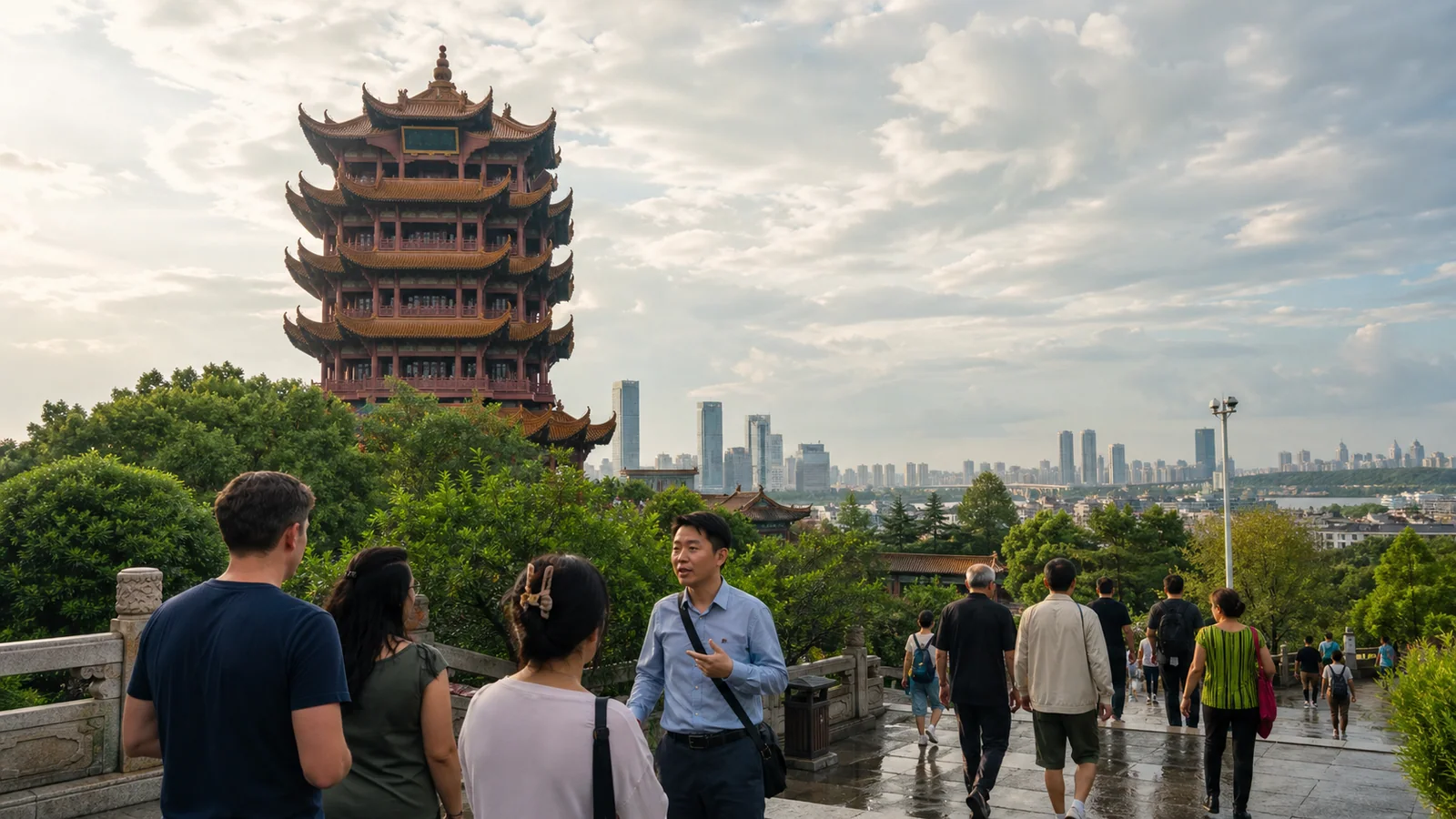
Wuhan is often crossed by train and rarely given enough time. Three days reveal a confident river city with ancient instruments, broad lake landscapes, excellent food and neighborhoods built around real local life.
Confirm the difficult part first. Tickets, routes and vehicles should remove uncertainty from the journey, not add another layer to manage.
Understand the three city centers
Wuhan grew from the historic cities of Wuchang, Hankou and Hanyang, divided and connected by the Yangtze and Han rivers. That geography still affects daily travel. A place that looks close on a flat map may sit across a bridge with heavy traffic. Group each day by side of the river and avoid crossing simply to collect one restaurant or photo.
Day one: Yellow Crane Tower and the river
Start at Yellow Crane Tower while the day is clear. The current structure is modern, but the cultural story and elevated view help visitors understand Wuhan. Continue toward the Yangtze riverfront and cross by the method that suits the group, whether bridge, vehicle or public ferry when operating normally. End in Hankou with old streets and a relaxed dinner rather than another distant monument.

Day two: Hubei history and East Lake
Give the Hubei Provincial Museum a real morning. Its collection is especially important for the Marquis Yi of Zeng tomb, bronze vessels and ancient musical instruments. Exhibition arrangements and performance sessions can change, so check the official schedule. After lunch, move to East Lake for a gentle greenway walk, bicycle ride or scenic stop selected for the weather and mobility of the group.
Day three: choose your Wuhan
Architecture lovers can explore concession era Hankou streets and riverside buildings. Families may prefer a science or nature visit. Food focused travelers can build the morning around a market and regional dishes with a guide who knows hygiene and dietary needs. Business guests can use the day for meetings in one district, then finish with a private river view. The point is to choose one Wuhan, not force every version into eight hours.
Hot dry noodles are breakfast, not a checklist
Reganmian is the famous first bowl, but Wuhan also offers soup dumplings, freshwater dishes and strong breakfast culture. Go early and eat where local routines are visible. A guide helps with ordering, yet simple places may have limited allergy controls. Carry translated dietary instructions and do not assume sesame paste, peanut and other nut pastes are interchangeable or absent.
A chauffeur saves energy across the rivers
Wuhan’s rail links are excellent, but a private vehicle is valuable once several districts, luggage or a family schedule are involved. Confirm the exact station because Wuhan, Hankou and Wuchang stations are separate. For airport days, protect time for distance and traffic. The best plan uses walking inside each area and the vehicle for the long joins between them.
Questions travelers ask
Is Wuhan worth visiting for tourists?
Yes. It combines major museums, river history, East Lake scenery and a strong local food culture with fewer international tour groups than many famous cities.
How many days should I spend in Wuhan?
Three days allow one river day, one museum and lake day, and a third day shaped around food, neighborhoods or business.
Which Wuhan train station should I use?
It depends on the route. Wuhan, Hankou and Wuchang stations are different, so confirm the exact station before arranging pickup.
Current information to check
Review Wuhan Municipal Government visitor information. Also review Hubei culture and tourism information. Opening hours, tickets, transport controls and operating procedures can change, so confirm them again close to travel.