
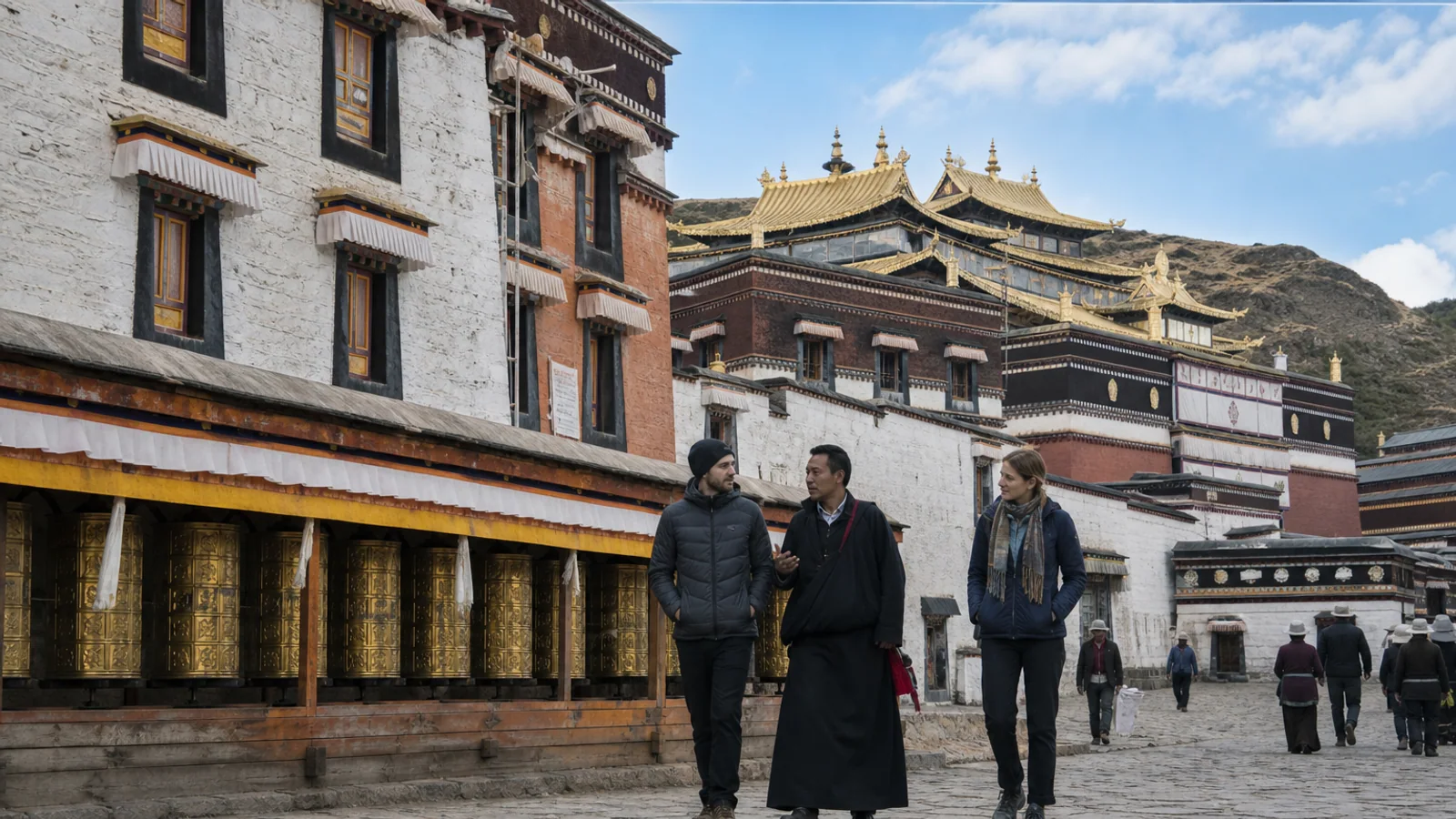
Labrang is one of the great monasteries of the Gelug tradition and remains an active place of study and worship. Three days from Lanzhou allow the road, higher altitude and religious setting to be approached with patience rather than turned into a brief photograph.
Confirm the difficult part first. Tickets, routes and vehicles should remove uncertainty from the journey, not add another layer to manage.
Day one: climb from Lanzhou without rushing
Meet at the exact Lanzhou airport, station or hotel and begin with a rested local chauffeur. Xiahe sits at roughly 3,000 metres, so a traveler can feel the elevation even without hiking. Stop for lunch and arrive with time to check into a warm hotel. Keep the first walk short, drink normally and avoid heavy alcohol. Significant symptoms require rest, medical advice or descent rather than determination.
Day two: enter Labrang with a guide and quiet attention
Labrang was founded in 1709 and is one of the six major monasteries of the Gelug school. Current visiting areas, guided routes, ceremony access and ticket arrangements can change. Follow monastery staff. Remove hats where requested, keep voices low and never step in front of worshippers. A visitor route is not permission to enter every courtyard or room.

Ask before every close photograph
Do not photograph monks, pilgrims, ceremonies or interiors without clear permission. Some sacred spaces prohibit cameras completely. Long lenses can feel intrusive even from a distance. Photograph architecture and the wider landscape where permitted, then put the camera away during active worship. The strongest memory may be sound, movement and the rhythm of the prayer circuit rather than a portrait taken from someone who did not consent.
Use the afternoon for Sangke or a slower town walk
Sangke grassland can add open landscape and a road break when weather and current access are suitable. It is also a working pastoral area, not an empty stage. Use legal viewpoints, do not drive across grass and do not pressure families into a home visit. A prearranged local experience should compensate hosts fairly and explain what is genuine daily life and what has been prepared for guests.
Prepare for altitude, temperature and dietary needs
Weather can shift quickly even in warmer months. Carry sun protection, a wind layer and water. Tell the guide about yak meat, dairy, gluten, pork and vegetarian needs before restaurants are selected. Muslim Hui and Tibetan food traditions are both present in the wider region, but kitchens and ingredients vary. Simple meals and an early night usually suit the altitude better than a packed evening.
Day three: leave space for the road back
Use the final morning for a quiet town walk or a second monastery circuit according to current access. Return to Lanzhou with a wide margin and avoid attaching a fragile flight. Continue deeper into Gannan only with more days, local conditions and a driver schedule designed for longer highland roads. One travel desk can coordinate the city pickup, Xiahe hotel, local guide and private vehicle while the monastery’s own rules remain final.
Questions travelers ask
How many days does Xiahe need from Lanzhou?
Three days allow two road days, one complete monastery day and a calmer adjustment to altitude.
Can visitors photograph inside Labrang Monastery?
Rules vary by space and ceremony. Follow staff and your guide, and never photograph people or interiors without clear permission.
Is Xiahe high altitude?
Yes, it is around 3,000 metres. Keep the first day light and respond seriously to significant symptoms.
Current information to check
Review Gansu official Xiahe and Labrang cultural tourism profile. Also review Gansu official Labrang religious ceremony profile. Opening hours, tickets, transport controls and operating procedures can change, so confirm them again close to travel.