
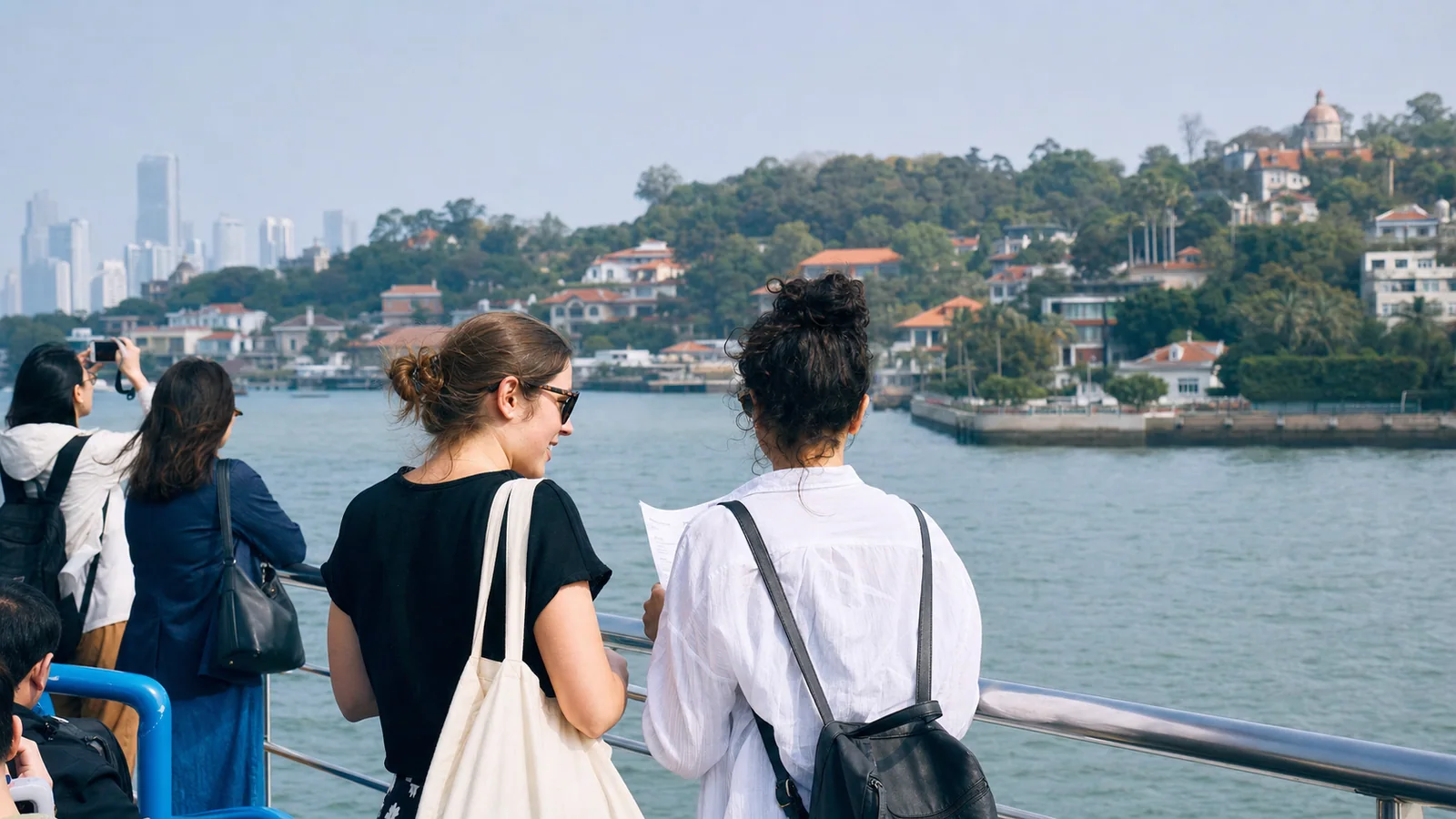
Xiamen works best when the itinerary accepts its natural rhythm. Keep Gulangyu as a dedicated day, use a private car for the mainland and leave enough space for the sea, shade and small discoveries.
The city is compact compared with Beijing or Shanghai, but bridges, ferry procedures and holiday crowds still shape the day. A chauffeur helps on the mainland. Gulangyu itself is largely pedestrian, so the car waits on the Xiamen side while the group explores on foot.
Three days suits couples, families and guests who want a softer stop between intense business cities. It can also become a comfortable beginning or ending to a longer Fujian journey.
Day one: Nanputuo, old Xiamen and the coast
Begin at Nanputuo Temple before the strongest heat. Dress respectfully and remember that it is an active religious site. The surrounding area gives a useful first sense of Xiamen’s greenery and hills.
Continue through an older neighborhood or toward Zhongshan Road. The exact walk should follow current access and the group’s interests. Look for shaded arcades, small food shops and the traces of the city’s maritime history rather than rushing from one photo point to another.
After a midday rest, drive part of the coastal route. Stop where the weather and traffic make sense. A beach visit can be pleasant, but the coast is more than a swimming plan. Walk, watch the changing light and finish with seafood or Fujian dishes.
Day two: Gulangyu without the rush
Reserve the Gulangyu day around the correct ferry. Visitor routes, terminals and ticket rules can change. Confirm the passenger names, passport details, departure terminal and return conditions before leaving the hotel.
Gulangyu is known for historic villas, gardens, music traditions and narrow lanes. It is tempting to follow the busiest route between famous points. A local guide can instead build a loop that includes major architecture and quieter streets while respecting residential areas.
Wear comfortable shoes. The island requires walking and includes slopes. Families with young children and travelers with limited mobility should reduce the number of ticketed interiors and allow more rest.
Lunch can be simple. Snack streets become crowded, and not every attractive display represents the island’s best food. Choose one or two regional dishes, carry water and keep enough time to reach the return ferry without stress.
Gulangyu is explored on foot. Your chauffeur can handle the mainland hotel and ferry terminal transfers, then meet the group after the return sailing.
Day three: gardens, Jimei or one more coastal morning
Use the final day according to the weather. Xiamen Botanical Garden can offer a green morning with very different plant environments, though it includes hills and can feel hot. Start early and choose only the areas that matter most.
Jimei is another option for architecture, education history and a different view of the city. It requires more driving, so combine it with the airport or railway direction when that improves the route.
Travelers who prefer a quiet ending can return to the coast, visit a local market with a guide or spend time in a café neighborhood. The final day does not need another large attraction to feel complete.
What to eat in Xiamen
Local cooking uses seafood, soups, noodles and the sweet savory balance found in parts of Fujian cuisine. Oyster omelet, satay noodles, peanut soup and filled pastries are common starting points, but quality varies.
Ask a guide to explain ingredients before ordering if the group has shellfish allergies, halal needs or strict vegetarian requirements. Sauces and broths may contain ingredients that are not obvious from the English name.
Weather and the best season
Xiamen has a subtropical climate. Summer can be hot, humid and affected by heavy rain or tropical weather. Winters are generally milder, while spring and autumn often support longer walks.
Weather affects ferries and outdoor attractions. Keep one mainland activity flexible so the operations team can adjust if marine conditions alter the Gulangyu plan.
Airport, railway and vehicle planning
Send the complete flight or train number because Xiamen has several transport points and station names matter. A sedan suits two light travelers. An MPV is more comfortable for families and groups with cruise or flight luggage.
Confirm the service hours, overtime, extra distance, parking and ferry transfer arrangements in writing. Add a local guide for Gulangyu and heritage walks when context matters.
Frequently asked questions
Are three days enough for Xiamen?
Yes. Three days gives one full day to Gulangyu, one day for old Xiamen and the coast, and a flexible final day for gardens, Jimei or a quieter local experience.
Can a private car drive onto Gulangyu?
No. Visitors explore Gulangyu on foot. The chauffeur handles transfers between the hotel and the correct mainland ferry terminal.
Should Gulangyu ferry tickets be booked early?
Yes, especially for weekends and holidays. Passenger details, terminal and sailing time should be checked carefully.
Is Xiamen suitable for families?
Yes. The pace can be gentle, but Gulangyu and garden visits involve walking. Choose fewer stops and an MPV when traveling with children or senior guests.
Official information to check
Use Xiamen’s official visitor travel tips, its Gulangyu visitor services information and the current international visitor update. Confirm ferry details for the travel date.