
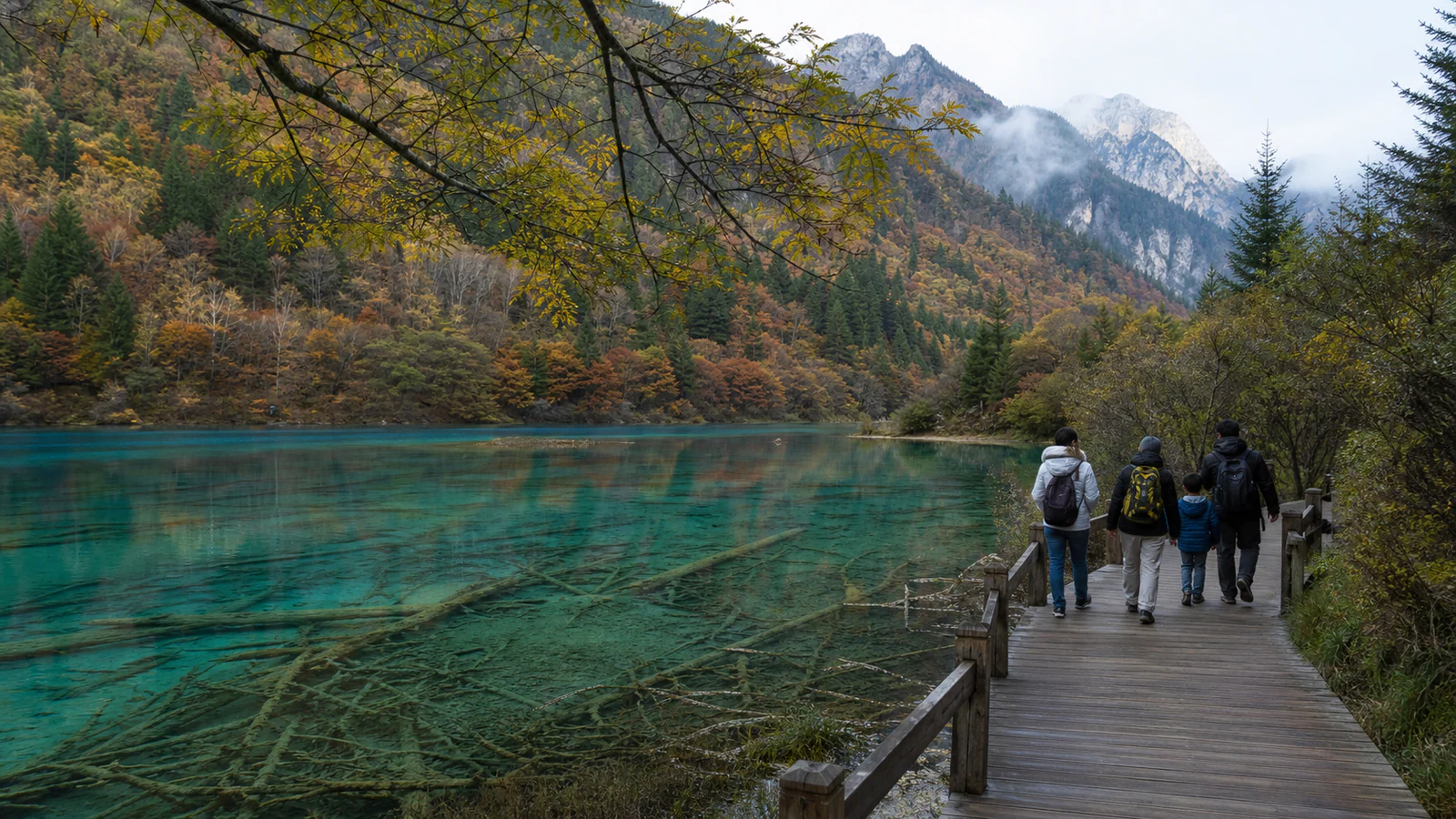
Chengdu and Jiuzhaigou belong in the same Sichuan journey, but they do not feel close. Chengdu is low, relaxed and urban. Jiuzhaigou is a mountain valley where altitude, weather and transport shape the day. Six days works when the route protects the connection instead of treating it as a short transfer.
High speed rail has made access to the region easier, yet a private road transfer remains necessary from the station to the valley and hotels. This itinerary gives Chengdu two useful days, Jiuzhaigou one complete scenic day and enough structure around the transfers to keep the trip comfortable.
The six day route at a glance
Arrive in Chengdu
Airport or station greeting, hotel check in, a gentle neighborhood walk and a Sichuan dinner adjusted to your preferred level of spice.
Pandas and city life
See the pandas early, then slow down in a park, teahouse or old neighborhood before dinner.
Choose one Chengdu day trip
Visit Sanxingdui, Dujiangyan or remain in the city. Do not combine distant sites simply to fill a list.
Rail and road into Jiuzhaigou
Take a suitable train toward the region, meet the private vehicle at the station and continue by road to the valley hotel.
Jiuzhaigou scenic area
Give the valley a complete day with an early entry, scenic shuttle buses, selected walks and a flexible route based on conditions.
Return with a protected connection
Travel back by road and rail. Add Huanglong or Songpan only when season, ticket time, altitude and the onward schedule genuinely allow it.
Day 1: arrive in Chengdu without overplanning
Chengdu has two major aviation gateways in the wider region, and several railway stations serve different routes. Send the exact airport or station, arrival time and hotel address. The correct pickup point prevents a tired arrival from turning into a long search across a large terminal.
Use the first afternoon to settle in. Taikoo Li and the central shopping area suit travelers who want energy and restaurants. A quieter riverside or park area suits families and slower trips. Take a short walk, drink tea and eat one well chosen meal. Sichuan food does not have to be painfully hot. A good restaurant can balance spice, fragrance and dishes for children or cautious eaters.
Day 2: see the pandas early, then let Chengdu slow down
Pandas are usually the reason families start planning Chengdu. Go early, when the air is cooler and the animals may be more active. Large research bases involve substantial walking, so comfortable shoes, a stroller plan and a clear meeting point are more important than formal clothes.
Do not follow the panda visit with three major attractions across the city. Choose one park, teahouse or neighborhood. Sit long enough to understand why tea is part of Chengdu life rather than a five minute photograph. Travelers who enjoy food can use the evening for a guided tasting route. Those with children may prefer an early dinner and rest before the next day.
Our three day Chengdu guide offers a deeper city plan if you decide to add another night.
Day 3: choose Sanxingdui, Dujiangyan or a deeper city day
Sanxingdui is the strongest choice for travelers interested in archaeology, bronze art and an ancient culture that looks very different from familiar images of imperial China. Timed entry and the road journey need planning. A guide helps the collection make sense, especially for visitors seeing it for the first time.
Dujiangyan offers a different story: an ancient irrigation system that still shapes the region. It combines engineering, landscape and walking. Mount Qingcheng can be included in a longer version, but adding every section may make the day too physical before the mountain journey to Jiuzhaigou.
A city day is not a weaker option. Markets, tea, a cooking experience and one museum can create a better memory than another early departure. Choose according to your energy and interests.
Day 4: the train shortens the journey, but does not remove the road
Current high speed services connect Chengdu with stations serving the Jiuzhaigou and Huanglong region. Train times and station patterns can change, so the exact service should be confirmed before the nonrefundable hotel night is fixed. Foreign travelers can use valid passports for real name rail tickets through official channels.
Your chauffeur meets the train and continues by road. This transfer passes through high mountain terrain and cannot be treated like a city pickup. Allow time, carry water and keep essential medication in hand luggage. An MPV is useful for families because the road journey is more comfortable and luggage remains together.
Arrive at the hotel, eat and sleep. Do not add a distant evening attraction. Jiuzhaigou rewards an early start the following morning, and the body may already be adjusting to elevation.
Jiuzhaigou and nearby routes sit well above Chengdu. Travelers with heart, lung or other relevant medical conditions should seek professional medical advice. Move slowly, hydrate and do not hide symptoms to protect an itinerary.
Day 5: give Jiuzhaigou one complete, flexible day
Reserve the scenic area entry using the correct passport details and keep the original document with you. Start early. The valley uses sightseeing buses to connect major sections, but visitors still walk between lakes, waterfalls, viewpoints and bus stops. A guide can choose a route based on current access, crowds, light and your physical comfort.
Do not judge success by the number of named lakes visited. Jiuzhaigou is memorable because of water clarity, forest, changing elevation and quiet details. Select the strongest sections for the season. Autumn color is famous, but it also brings demand. Spring, summer and winter each change access, clothing and the character of the water.
Carry layers, rain protection, water and simple snacks. Keep the group together at shuttle changes. Mobile coverage should not replace an agreed meeting point. Families should explain the day to children before entering because the scenic buses and walking rhythm can be tiring.
Day 6: protect the return before adding Huanglong
Huanglong is beautiful, but it is not a casual roadside stop. It involves higher elevation, its own access arrangements and a physical route that may not suit every traveler. Add it only when the season, opening status, ticket time, rail schedule and health of the group align.
Songpan can be a gentler cultural stop on some routes, but the return connection remains the priority. Missing the train creates more disruption than skipping one attraction. If an international flight leaves Chengdu the same day, build a large buffer or add another night. Mountain roads and weather deserve respect.
When to travel and what to pack
- Spring: changing weather, fresh vegetation and the need for layered clothing.
- Summer: green landscapes, rain protection and higher visitor numbers during school holidays.
- Autumn: celebrated color, cooler mornings and strong demand that requires early planning.
- Winter: a quieter visual character, cold conditions and possible seasonal changes to access.
Pack shoes with grip, a light rain layer, warm layers appropriate to the month, sunscreen and any personal medication. A power bank is useful, but the original passport is essential for transport and ticket checks.
Vehicle and luggage planning
A sedan works for one or two people with modest luggage. An executive MPV gives families and small groups more comfort on the mountain road. Share exact case sizes. A vehicle that seats six people may not safely carry six people plus six large cases.
The private vehicle does not normally replace the official sightseeing transport inside Jiuzhaigou. Its value is the reliable station meeting, hotel transfer, regional route, luggage control and flexibility before and after the scenic area.
What our team can arrange
Send travel dates, arrival city, preferred hotel level, passenger ages, luggage, medical mobility considerations and the places that matter most. We can connect airport or station arrivals, Chengdu touring, guides, rail planning, the Jiuzhaigou road transfer, hotel coordination and the return.
Tickets and schedules remain subject to official availability. Our role is to make the parts work together and tell you when a connection is too fragile.
Frequently asked questions
Is six days enough?
Yes, as a sensible minimum. Seven days is better if you want another complete Chengdu day, Huanglong or a more protected return.
Can I take a train toward Jiuzhaigou?
Yes. High speed rail now serves the region, but a road transfer is still required from the station to Jiuzhaigou. Always check the current timetable.
Is the valley suitable for seniors?
Many people visit successfully, but the day includes altitude, walking, steps and shuttle changes. Use a slower route and seek medical advice for relevant conditions.
Can you arrange guides and tickets?
We can coordinate local guides and assist with the itinerary and ticket process, subject to official availability and passport requirements.
Official information to check
Confirm current scenic access through the official Jiuzhaigou website and rail details through China Railway 12306. Train schedules, ticket windows and scenic routes can change by date.