
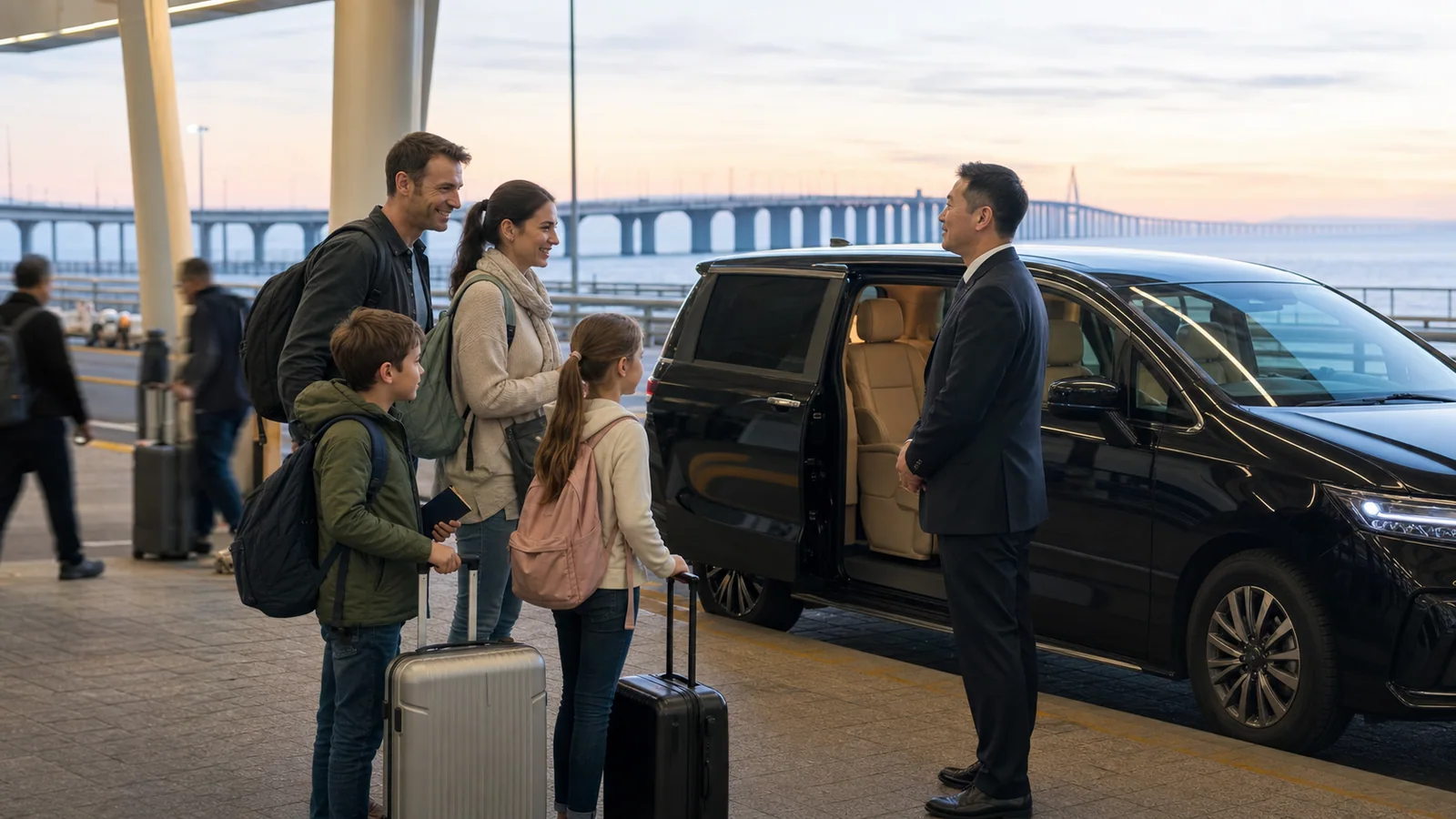
Hong Kong, Macau and Shenzhen make a powerful first Greater Bay Area journey. Hong Kong brings the harbor and dense neighborhoods, Macau adds heritage and food, and Shenzhen shows contemporary design, technology and a fast changing urban culture.
The route works best when each border is treated as a real travel segment. Check entry permission for Hong Kong, Macau and Mainland China separately. Then choose the crossing and vehicle around the hotel locations, luggage and time of day.
Day one: arrive in Hong Kong
Protect the arrival day. Meet the chauffeur at Hong Kong International Airport, settle into the hotel and choose one gentle evening area. Tsim Sha Tsui works for harbor views, while Central and Sheung Wan work well for a short walk and dinner.
Do not schedule a same day border crossing after a long intercontinental flight unless the trip absolutely requires it. A night in Hong Kong creates recovery time and protects the rest of the route.
Day two: Hong Kong with a clear geographic plan
Use the morning for Victoria Peak before weather or crowds reduce the experience. Continue through Central, the Mid Levels area and the waterfront. In the afternoon, choose between Kowloon neighborhoods, a museum, shopping or a quieter coastal stop.
A private vehicle is most useful when the party includes children, senior guests or several appointments. For compact Central and Kowloon exploration, combine walking with planned pickups.
Day three: Hong Kong to Macau
Cross to Macau by a licensed private vehicle over the Hong Kong Zhuhai Macao Bridge, or use a ferry when its terminal and schedule suit the trip better. The bridge itself operates 24 hours, but vehicle and service arrangements must be confirmed.
After hotel check in, explore Senado Square, the old streets, the Ruins of St. Paul’s and Mount Fortress. Keep the evening for a Macanese or Cantonese dinner.
Day four: Taipa, Cotai and Coloane
Start in Taipa Village, then use the car to connect Cotai and Coloane. Choose one resort experience or show rather than visiting every complex. Finish with a relaxed meal in Coloane or return to Cotai after dark.
This is the easiest day to slow down. Macau is compact, and constant vehicle changes can make it feel smaller rather than richer.
Day five: Macau to Shenzhen
The cleanest route depends on current border arrangements, vehicle permits and the Shenzhen hotel. A through vehicle may be possible for the confirmed route, or the journey may use a coordinated vehicle change at the appropriate checkpoint.
Reach Shenzhen with enough time for an easy afternoon. Explore the Civic Center axis, a design or contemporary art space, or the waterfront around Shenzhen Bay according to the hotel.
Day six: modern Shenzhen
Choose one theme. Technology buyers may visit Huaqiangbei with a clear product brief. Families may prefer OCT Harbour, a museum or a coastal area. Architecture and design travelers can combine Futian and Nanshan.
For departure, Shenzhen Bao’an Airport is straightforward when the next flight leaves Mainland China. Hong Kong Airport requires another border movement, so allow a generous buffer and confirm the vehicle route.
Documents and border planning
Hong Kong, Macau and Mainland China apply separate entry rules. A traveler may be admitted to one and still require a visa or different permission for another. Check each passport individually, including children.
Keep passports and arrival records in hand luggage. Do not pack them in the rear of a fully loaded vehicle. Tell the operations team about visas or transit conditions that affect the route, but use official authorities for the final immigration decision.
Vehicle and luggage strategy
A dual plate or otherwise licensed cross border vehicle can reduce handoffs, but it must be approved for the exact crossing. Availability is limited during holidays and major events. Book early.
For four adults with large cases, choose an MPV or van rather than a sedan. If shopping is part of the trip, leave spare luggage capacity. The six day route feels premium when the vehicle absorbs the transitions without becoming crowded.
Keep all three cities under one confirmed itinerary. When a flight, ferry or border time changes, the next driver and hotel movement can be adjusted together.
Frequently asked questions
Can I visit Hong Kong, Macau and Shenzhen in six days?
Yes. Two days in Hong Kong, two in Macau and two in Shenzhen creates a fast but sensible first route when the borders are planned in advance.
Does one visa cover all three cities?
Not necessarily. Hong Kong, Macau and Mainland China have separate entry rules. Check the requirements for each traveler and passport.
Can one private car complete the whole route?
Sometimes, but only when the vehicle holds the correct permits for the exact crossings. Some itineraries require a coordinated vehicle change.
Which airport should I use at the end?
Shenzhen Airport is convenient for a Mainland departure. Hong Kong Airport can work, but it adds a border movement and needs more time.
Official information to check
Review the official bridge transport services, the HZMB passenger clearance guide and the official Macau entry information. Entry and vehicle rules can change.