
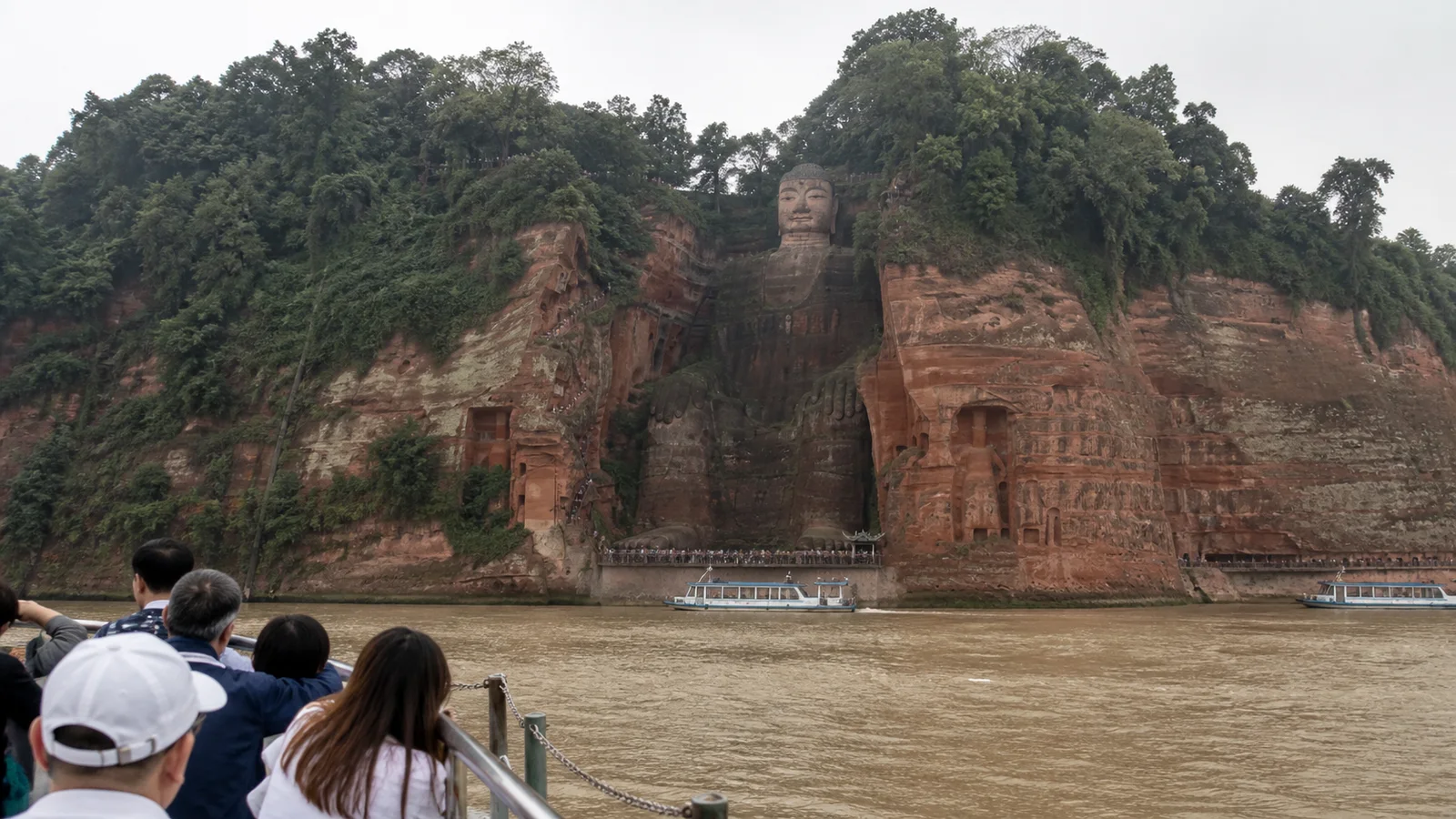
See the Giant Buddha at river scale, sleep near Mount Emei and reach the Golden Summit without forcing two major World Heritage landscapes into one rushed day.
Choose the experience before the transport. Tickets, gates and vehicles should support the day you want, not force the group through a generic route.
Why two days is the practical minimum
Leshan and Mount Emei share one UNESCO listing, but they are not one compact attraction. Leshan is a river city with the Buddha carved into a cliff. Mount Emei is a large sacred mountain with several temple zones and a summit transport chain. One overnight removes the return to Chengdu and allows each landscape to have a distinct pace.
A strong route leaves Chengdu early, visits Leshan on day one, then sleeps near Emeishan. Day two begins before the largest groups, reaches the Golden Summit and returns to Chengdu in the evening. Travelers who want lower mountain temples and serious hiking should add a third day.
Choose the river boat or the cliff path
The sightseeing boat gives the famous frontal view and makes the enormous seated figure understandable in relation to the river. It is efficient and usually easier for children or older guests. The cliff route enters the cultural site, passes temples and descends near the sculpture, but stairways can be steep and the queue may move slowly. Water level and weather can affect boat operations.

A balanced first day
Reach Leshan in the morning and decide the order based on the confirmed boat session and crowd level. If the boat is the priority, do not bury it behind a long lunch. Add a measured walk through the temple area when energy allows, then continue to the Emeishan hotel before dinner. Keep the evening simple because the summit morning starts early.
The drive between central Leshan and the Mount Emei hotel zone is straightforward, but check the exact property. Hotels described as being at Emei can be in the city, beside Baoguo Temple or much closer to a scenic transport point. The name alone does not reveal the morning journey.
How the Golden Summit day really works
The summit is not reached by one cable car from the hotel. Most routes involve a scenic bus, walking, a cableway and more walking at high elevation. Queues can form at each stage. Dress for a colder summit even when the base is warm, carry only what you need and give the group time to adapt rather than sprinting between transport points.
When the lower mountain deserves another day
Baoguo Temple, Fuhu Temple and forest paths show the religious landscape more quietly than the Golden Summit. Wannian Temple and other middle mountain routes add depth for active travelers. If temples, walking and ecology matter, three days is the honest recommendation. Two days should focus on Leshan plus one clear Mount Emei experience.
Vehicle, guide and luggage planning
A private vehicle carries overnight luggage, removes station transfers and gives the plan room to respond when a boat or cableway changes. Choose an MPV for families or four adults with cases. A cultural guide explains Buddhist history and manages the visitor sequence. The chauffeur waits outside controlled scenic zones and should have the exact pickup point before the group begins its descent.
Questions travelers ask
Is the Leshan boat or walking route better?
The boat gives the clearest full view of the Buddha and suits limited mobility. The walking route offers close detail and temple context but includes many stairs and queues.
Can Leshan and Mount Emei be done in one day?
It is possible to touch both, but the day becomes dominated by transfers. Two days gives Leshan proper time and a much better chance of reaching Mount Emei early.
Where should I stay?
Stay near Baoguo Temple for flexible access and more hotel choice, or closer to the mountain transport route when an early Golden Summit departure is the priority.
Current information to check
Review UNESCO Mount Emei and Leshan listing. Opening hours, ticket channels, route controls and weather procedures can change, so reconfirm them close to travel.