
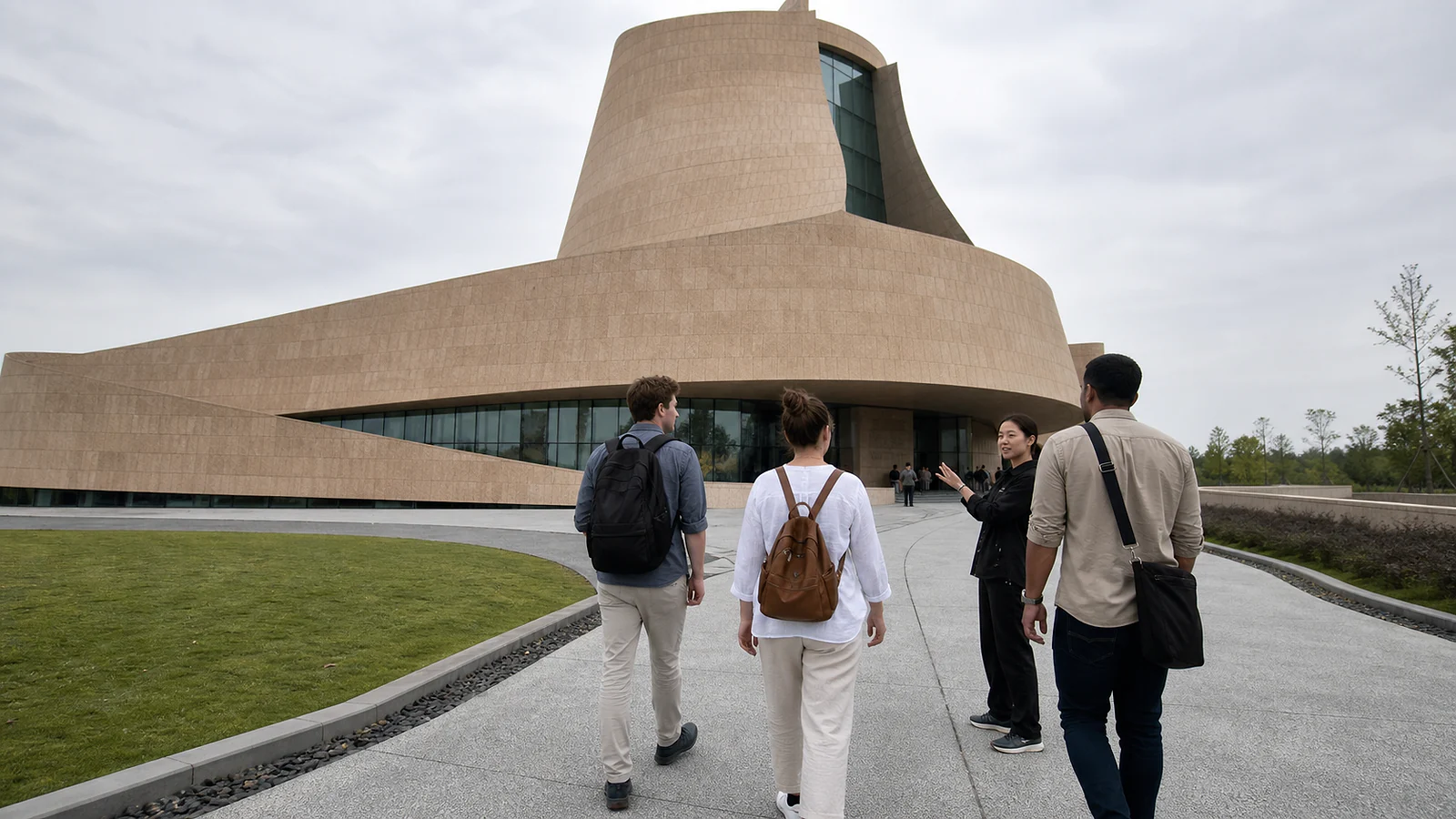
Sanxingdui is one of the rare museums that can change how a visitor imagines ancient China. Its bronze masks, monumental standing figure, gold work and sacred tree do not look like the objects most first time travelers have seen in Beijing or Xi’an.
The site belongs to the ancient Shu civilisation of Sichuan. Archaeology keeps developing as new sacrificial pits and fragments are studied. That continuing research is more interesting than the tired internet claim that the objects must be alien because they look unfamiliar.
Why Sanxingdui matters
The discoveries show that early Chinese civilisation was not one uniform visual culture growing from a single center. Ancient Shu developed its own ritual language, metalworking and relationship with neighbouring regions. The huge eyes, projecting pupils and tree imagery are evidence of a different worldview, not evidence that archaeology has failed.
The modern museum near the ruins opened a major new building in 2023. It brings hundreds of objects into a clearer sequence and provides space to understand excavation, conservation and reconstruction. This is why a two hour stop feels inadequate.
Start with the timeline before the famous masks. When geography and excavation come first, the large bronzes stop being isolated curiosities and become part of a civilisation.
How international visitors should book tickets
Use the official Sanxingdui Museum website and its inbound visitor reservation option. Enter the passport name and number exactly as shown on the document. Carry the original passport used for booking. Do not rely on a hotel photocopy for real name admission.
Ticket release windows, daily capacity and holiday arrangements can change. Reserve as soon as the official window opens, particularly for weekends, school holidays and national holiday periods. If a guide or travel desk books on your behalf, ask for the reservation record and verify every passport number.
Do not publish an article screenshot as if it were a permanent ticket rule. The museum is popular and its systems are improving. Check the official channel again a few days before the visit.
The ideal Sanxingdui day from Chengdu
Leave central Chengdu
Meet at the hotel after breakfast. The museum is in Guanghan, north of the city. Departure time should reflect the booked entry, hotel district and weekday traffic rather than a generic distance estimate.
Follow the museum chronologically
Begin with landscape, archaeology and the pits. Continue to bronze masks, human figures, gold objects, jade and the reconstructed sacred tree. Take a short seated break between major galleries.
Lunch without rushing the last gallery
Choose a simple local lunch in Guanghan or return toward Chengdu. Keep dietary instructions written in Chinese. The museum deserves priority over a long restaurant detour.
Return to Chengdu for a quiet second chapter
Use the afternoon for tea, a neighbourhood walk or rest. A Sichuan opera evening can work if the group still has energy. Do not add three unrelated attractions only because the vehicle is available.
What deserves time inside
The bronze masks attract attention first, but the standing figure and bronze tree reveal scale and technical ambition. Gold masks show another material language. Jade and smaller objects make the ritual system more complex than a collection of giant faces.
Look at how pieces were found, not only how they appear after conservation. Many objects were broken, burned or deposited in pits. Reconstruction involves patient comparison, joining and scientific analysis. A gallery on conservation can be as revealing as the headline objects.

Photography rules can differ by gallery or temporary exhibition. Follow the current signs, avoid flash and never block a case while composing a photograph. The museum is for looking first.
English guide, audio guide or independent visit?
Independent visitors can use bilingual labels and the museum’s current interpretation tools. An English speaking cultural guide adds value if your group wants a coherent story rather than individual object labels. Book the guide before the ticket date and confirm where the guide meets you.
A good guide should explain what archaeologists know, what remains debated and how the site fits wider Bronze Age China. Avoid anyone who turns every unanswered question into a supernatural claim. Mystery is not improved by replacing evidence with performance.
What to combine with Sanxingdui
The Chengdu Research Base of Giant Panda Breeding can be paired only with an early start and realistic expectations. Both places reward morning time, and trying to give both the best hours creates conflict. Families may prefer pandas on a separate day.
For a culture focused itinerary, connect Sanxingdui with Chengdu’s Jinsha Site Museum on another day. The two sites help explain ancient Shu across time and provide a much stronger intellectual route than attaching a random shopping street.
If Sanxingdui is the only trip outside Chengdu, return for tea or a relaxed dinner. The day remains complete because the museum has already provided depth.
Road planning and the right vehicle
A private car gives direct hotel pickup, passport reminders, a stable place for coats and a waiting chauffeur after the galleries. It also removes uncertainty around the final local transfer from rail or bus.
A sedan suits two or three guests. A spacious MPV is better for a family, older travelers or a group using a private guide. The museum is accessible, but long galleries still create fatigue. Keep water in the vehicle and build in one real seated break.
The chauffeur manages the road. The guide enters the museum with you. Confirm both roles clearly so the day does not depend on a driver providing specialist archaeology in another language.
Questions travelers ask
Are the Sanxingdui objects really 3,000 years old?
Many major finds belong to the Bronze Age ancient Shu culture and are more than three millennia old. Exact dating and interpretation differ by object and archaeological context.
Is the archaeological site open like the museum?
The museum is the main visitor experience. Excavation and protected research areas are not casual open ground. Follow current official visitor routes.
Is Sanxingdui good for children?
Yes for curious school age children, especially with a guide who can explain scale, discovery and reconstruction. Keep the visit shorter for younger children and include a break.
Current information to check
Use the official Sanxingdui Museum website for inbound visitor tickets, identification rules and current opening information. The State Council Information Office provides useful context on the museum and conservation work. Reconfirm guide availability and entry details close to the visit.