
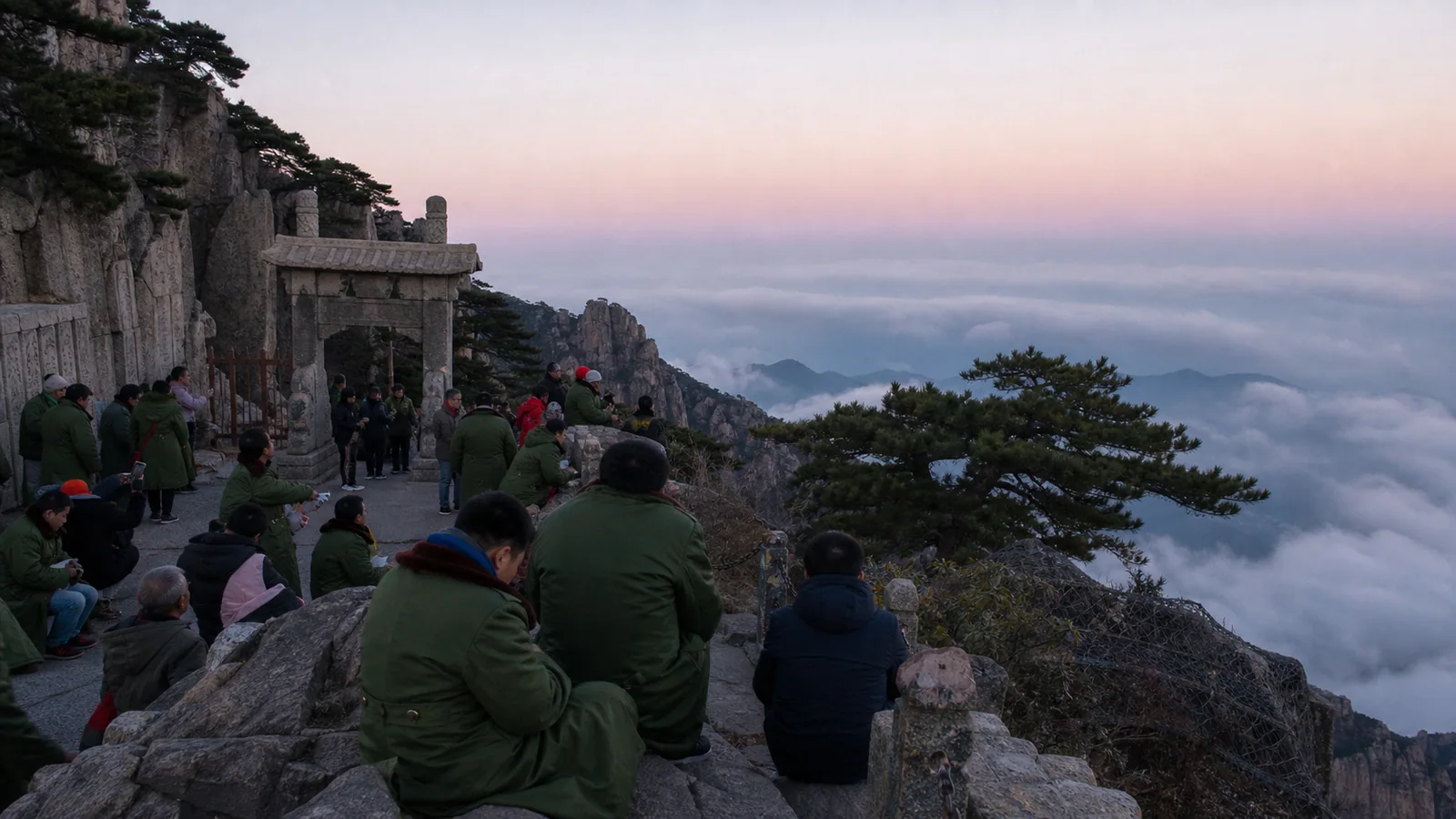
Mount Tai is both a physical ascent and a cultural route of inscriptions, temples and imperial memory. Choose the climb for your knees, not your pride.
Choose the experience first. Tickets, routes and vehicles should support the journey you want, not force everyone through a generic schedule.
Choose between the classic path and transport route
The Red Gate route follows the historic central climb past temples, inscriptions and thousands of stone steps. It is the right choice for active travelers who want the pilgrimage itself. The Tianwaicun route uses scenic transport toward Zhongtianmen, where a cableway can continue toward the summit area when operating. It saves strength but still leaves walking and stairs above.
A mixed plan can use transport upward and walk selected cultural sections downward, or climb from Red Gate and descend by cableway. Check operating notices because wind, maintenance and crowd control can change the available combination. Do not assume the cable car will solve a late start.
A balanced day from Jinan
Leave Jinan early and travel to the confirmed Taishan entrance, not merely to central Tai’an. Carry the passport used in the reservation. If using Tianwaicun, continue through scenic transport and cableway, then walk toward the summit temples and viewpoints. Active groups starting at Red Gate need a much earlier departure and a clear turnaround time.

The famous final steps are genuinely steep
The approach to the South Gate to Heaven rises sharply on long stone stairways. Stone can be polished and wet, while descending can be harder on knees than climbing. Use the rail when needed, keep a steady pace and allow faster visitors to pass. Trekking poles may help on permitted sections, but supportive shoes and realistic pacing matter most.
Older guests can enjoy summit scenery with cableway assistance, yet the upper area is not step free. Ask the travel desk to assess the route against real mobility needs. A chair or wheelchair does not fit every path, and accessibility information should be confirmed for the exact date.
Plan sunrise without promising the sky
For sunrise, stay in Tai’an and begin at night or sleep near the summit in simple accommodation. Both options involve cold, darkness and uncertain visibility. Bring a headlamp, warm layers and a fully charged phone. Rental coats are common but condition and availability vary. Never climb an unlit unofficial path to avoid a controlled entrance.
Cloud may hide the sunrise completely. Treat dawn as one part of the mountain rather than a guaranteed spectacle. An overnight should still include cultural sites and inscriptions in daylight so the journey has value even when the horizon remains grey.
Do not miss Dai Temple
Dai Temple in Tai’an provides the ritual beginning or conclusion to the mountain. Its courtyards, ancient trees and imperial associations explain why generations climbed Taishan. Add it before an afternoon ascent or after a morning descent instead of treating the mountain as a fitness challenge with no history.
Use current entry and time rules
Official management requires the reservation entrance and time period to match the visit. Ticket validity and included areas may be described differently across channels, so review the current official notice rather than relying on an old price screenshot. A private chauffeur connects Jinan, Tai’an hotel and the correct gate, but scenic transport remains controlled separately.
Questions travelers ask
Can Mount Tai be visited as a day trip from Jinan?
Yes. Use an early private transfer and choose the Tianwaicun transport route unless the full stair climb is the main objective.
How hard is the Red Gate climb?
It is a long ascent with thousands of stone steps. Active travelers should still allow several hours and plan the descent carefully.
Is sunrise guaranteed?
No. Cloud, haze and weather can hide the horizon. Build cultural sites and daylight views into the journey too.
Current information to check
Review UNESCO Mount Taishan listing Also review official Mount Tai reservation notice. Opening hours, ticket rules, route controls and weather procedures can change, so confirm them again close to travel.