
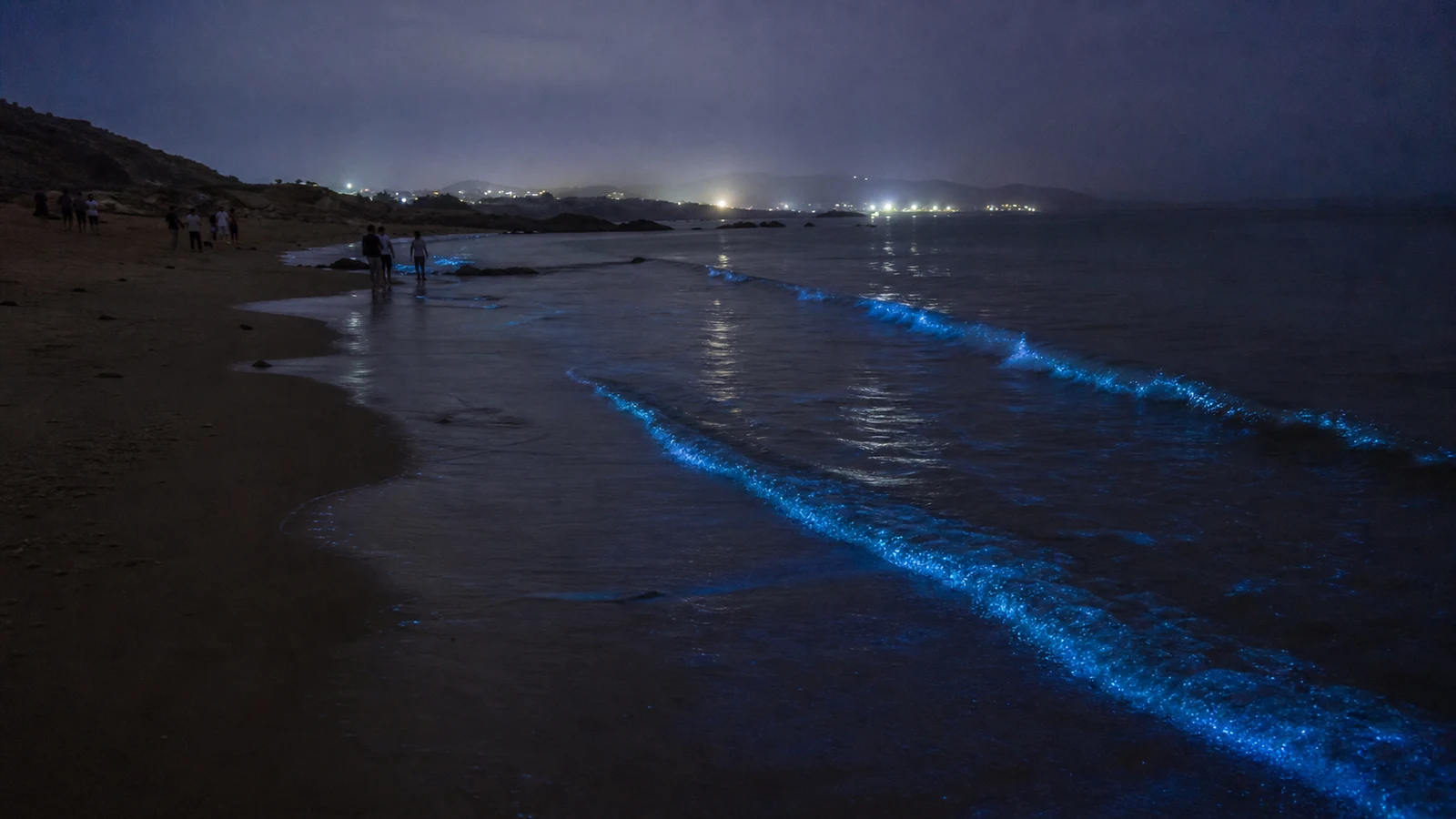
One short clip turned Pingtan into a dream for millions of Chinese travelers: a dark beach, a foot touching the water and a blue line of light running through the wave. The moment is real. The part the clip removes is the waiting.
Blue tears are produced by bioluminescent organisms in the sea. Around Pingtan, the best known spring events are commonly linked to noctiluca. Their light can be delicate, bright or almost invisible to the eye. The glow may reach one beach, fade and appear later somewhere else. Wind and water move faster than an itinerary.
That uncertainty does not make the journey a bad idea. Pingtan has one of Fujian’s strongest coastal roads, granite shores, stone villages, wind farms and long views across the Taiwan Strait. Plan for the island and let the glow be the rare extra. That is how the trip remains worthwhile on a quiet night.
What the viral video leaves out
A phone camera can collect light over several seconds and show more blue than your eyes see. Editing may make it brighter again. Some nights genuinely are spectacular, but a pale blue sparkle at the edge of a small wave is a more common first encounter.
The location also changes. A beach recommended at dinner may be quiet by midnight while another part of the coast becomes active. Pingtan’s official meteorological service now provides a short probability forecast. Check it, then use current local reports. Old lists of “guaranteed beaches” are not useful.
Never build an expensive detour around a promised sighting. We can monitor, move the vehicle and keep a safe late return. We cannot schedule marine life.
The three day Pingtan route
Fuzhou to the island
Meet at Fuzhou Changle International Airport, a Fuzhou hotel or the railway station. Drive to Pingtan, check in and keep the first afternoon gentle. Walk Longwangtou beach or the seafront near town. After dinner, review the forecast before deciding whether to go out again.
North coast and stone villages
Follow the northern ecological corridor through Beigang, Changjiang’ao and the exposed coastal viewpoints. Stop when the light is good instead of trying to collect every platform. Rest before sunset. The vehicle remains ready for the most likely safe viewing area after dark.
South coast or an unhurried return
If the first night was quiet, use the second evening before leaving the next morning. Otherwise, explore the south around Tannan Bay and the quieter shore, then return toward Fuzhou. Keep airport timing conservative because weekend and event traffic can grow quickly.
Why the northern coastal road deserves daylight
The north is not filler before a night search. The road connects stone houses, wind turbines, small bays and high views. Fujian’s tourism authority identifies the corridor as a model route linking villages and coastal sites across the island.

Beigang has developed into a creative village, but the old stone fabric still explains how island homes responded to strong wind. Changjiang’ao opens the view, with turbines standing above the beach and hills. Farther viewpoints can feel empty in the morning and busy near sunset. A private route lets you pause where conditions are good and leave a crowded platform without losing the day.
How a responsible night search works
At dinner, check the official two day forecast, weather warnings and live reports. A probability level is not a promise. If conditions are weak, choose one mature public area and wait calmly. If credible activity appears elsewhere, the driver can reposition the group.
Longwangtou is useful when safety and easy access matter because it is close to town and has more developed support. Other beaches may be darker, but darkness can also mean narrow roads, limited parking, wet steps and no quick help. Families, older travelers and anyone unfamiliar with the coast should value safe access above a dramatic photograph.
Agree on a final return time before leaving. A search that continues until dawn can ruin the next day and encourage tired driving. For most guests, two focused hours with one possible move is better than a restless tour of the whole island.
Respect the coast
Do not enter deep water, climb barriers or stand on dark wet rocks. Avoid strong lights directed at the water and never throw objects into the sea to trigger a glow. Disposable shoe covers left on beaches became a visible pollution problem during the 2026 season. Proper closed shoes are safer and create no single use waste.
Noctiluca itself is not generally described as a toxin producer, but a large bloom still changes water conditions and may carry bacteria or irritants. Do not drink seawater. People with sensitive skin should avoid unnecessary contact and wash exposed skin with clean water.
Photographing what you actually saw
A recent phone with night mode can record a gentle event. Stabilize it against a railing or small tripod, reduce screen brightness and avoid flash. A camera with a bright wide lens gives more control. Start with a short exposure, high ISO and manual focus near the breaking wave, then adjust.
Do not let photography consume the sighting. The glow may last minutes. Watch first. Take a few frames, then put the screen down. The honest photograph may be darker than a viral clip, but it will still belong to your night.
Season, weather and what to pack
March through June is the most discussed viewing period. Spring nights can be cool and windy. Summer brings heat, stronger sun and possible storms. Typhoon conditions can alter transport and close coastal areas. Always follow local warnings.
Pack a light windproof layer, shoes with grip, water, insect protection and a small power bank. A red light is less disruptive than a bright white torch, but use any light needed for safe footing. Guests arriving directly from an international flight should not plan a late search on the first night if fatigue is already strong.
Where private transport changes the experience
Pingtan has a railway station and local transport, so a private car is not the only way to arrive. Its value appears after arrival. Daylight viewpoints are spread along the coast. Night reports can change the target. Public services are less convenient when a beach search ends late.
For a couple, a comfortable sedan is enough. A family with camera equipment and luggage may prefer a van. The vehicle should carry drinking water, dry towels and a simple first aid kit. A Mandarin speaking coordinator can call the hotel or local contact while the driver remains focused on the road.
If you only have one night
Arrive by early afternoon, follow the north coast to Changjiang’ao, eat before the evening rush and check the forecast. Choose one safe beach after dark, return at a fixed time and leave the next morning. Do not add the entire south coast. A one night visit is already vulnerable to weather, so good pacing matters more than the number of pins.
Questions travelers ask
Will we definitely see the blue tears?
No. We will never sell the event as guaranteed. We can choose the right season, monitor the official forecast and respond to current reports.
Is Pingtan still worth visiting without them?
Yes, particularly for travelers who enjoy sea roads, stone villages, photography and less familiar China. If you only want a bright blue wave and nothing else, the uncertainty may not suit you.
Can children join the search?
Yes, with an early finish and a developed viewing area. Young children should stay away from the waterline after dark and always remain with an adult.
Can Pingtan connect with another Fujian trip?
Fuzhou is the natural gateway. Xiamen and the Fujian tulou can form a wider journey, but they should be separate chapters rather than rushed into the same day.
Current information to check
Use the Fuzhou Center for Disease Control’s 2026 blue tears safety and forecast guide, the China Meteorological Administration’s seasonal explanation and Fujian’s official description of the Pingtan northern ecological corridor. Confirm weather, viewing notices and local access again on the day.