
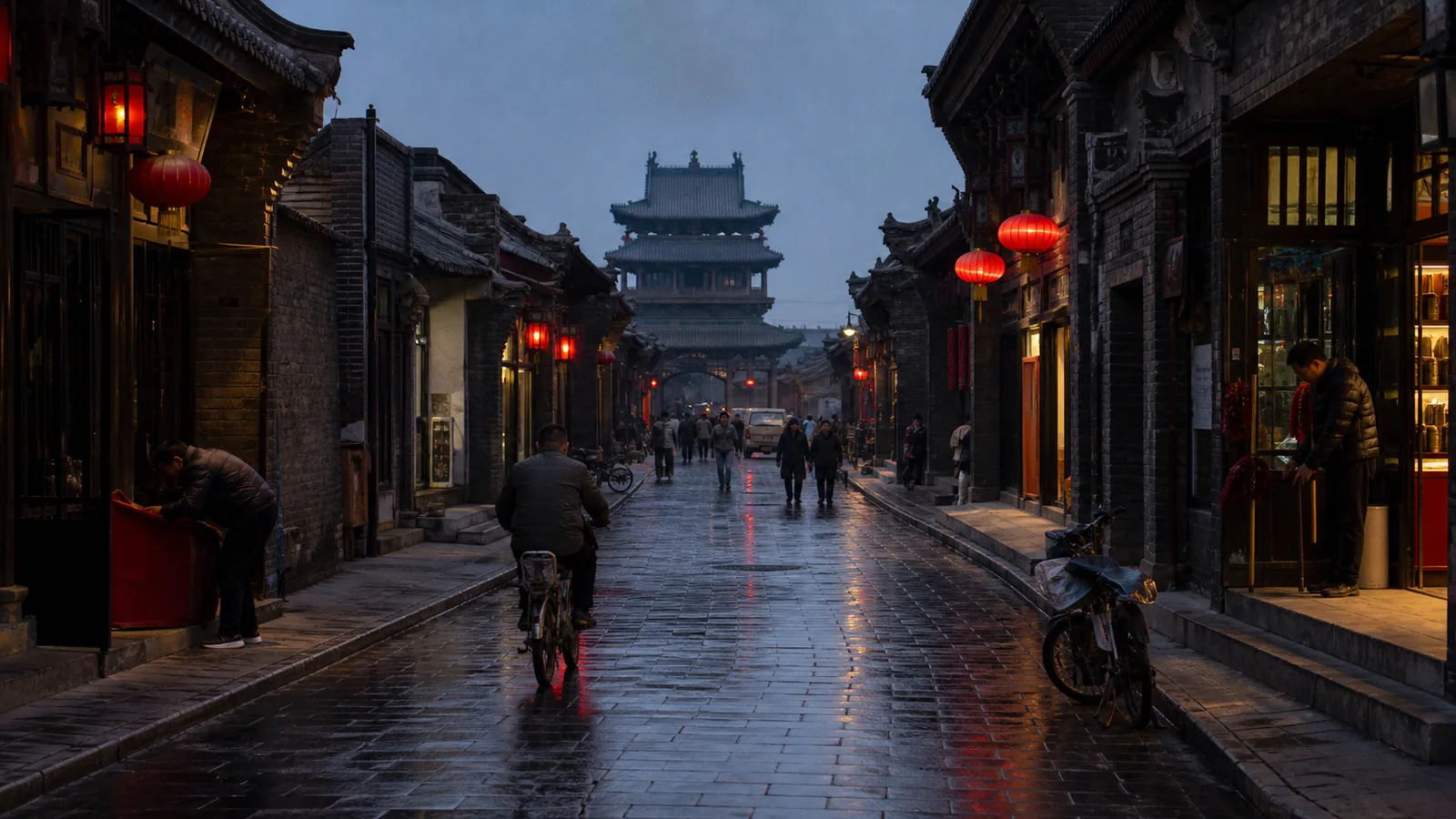
Pingyao becomes far more interesting when its lanes are read as a network of merchants, couriers, banks, homes and temples rather than a row of souvenir shops.
Choose the experience first. Tickets, routes and vehicles should support the journey you want, not force everyone through a generic schedule.
Solve the last kilometer before arrival
High speed trains use Pingyao Gucheng station outside the old city. Private vehicles usually cannot drive freely through the protected inner streets, so the final transfer may involve an approved shuttle, small local vehicle or a walk from the gate. Send the hotel name in Chinese and confirm which gate handles luggage. Dragging large cases over old paving is an avoidable first impression.
Choose a courtyard hotel for atmosphere or a modern property outside the walls for easier access and quieter rooms. Historic rooms may have raised thresholds, stairs and compact bathrooms. Ask about the exact room rather than assuming every attractive courtyard photograph represents every room.
Day one: understand the city from above and within
Begin on the city wall when open and weather allows. Its square plan explains the gates, main streets and compact neighborhoods below. Continue to the county government complex, then use one or two courtyard museums to understand administration and domestic life. Stop for lunch rather than trying to collect every included attraction before closing.

Follow the money through Rishengchang
Pingyao prospered through merchant networks and early draft banks that moved value across China without carrying bags of silver on every road. Rishengchang is the best known site, but its story makes more sense with a guide who can explain remittance systems, account security and the trust relationships behind them. Nearby compounds show how commercial work connected with family residence.
Avoid turning the afternoon into a sequence of similar doorways. Choose one banking site, one domestic courtyard and one public institution. Look at roof detail, secure rooms and street position. This selective route produces a clearer story and leaves time for the city after tour groups depart.
Keep the evening unprogrammed
Lanterns and food stalls change the old streets after dark. Walk one main lane, then turn into quieter side streets without entering private courtyards. Eat Shanxi noodles, return to the hotel and wake early. The nearly empty city just after sunrise often feels more authentic than an expensive staged performance.
Day two: temples outside the walls
Visit Shuanglin Temple for its extraordinary painted sculpture, subject to current opening and photography rules. Zhenguo Temple can be added for travelers deeply interested in early timber architecture, but it requires more road time. A private vehicle makes these outer sites practical and keeps luggage ready for the train afterward.
A slower city is the premium choice
Pingyao can be technically visited on a long day from Taiyuan, yet two nights reveal why the urban fabric matters. Good planning protects dawn, one thoughtful explanation and an easy station transfer. It does not force every admission punch. Families and older guests should use short shuttle segments when available and save walking for the most characterful lanes.
Questions travelers ask
How long should I spend in Pingyao?
Two days and two nights provide an excellent first visit, including quiet morning streets and one temple outside the walls.
Can a private car enter Pingyao Ancient City?
Access is controlled. Arrange the correct gate and hotel luggage transfer before arrival.
Is Pingyao only worth visiting for the wall?
No. Its merchant courtyards, banking history, government complex and nearby temples give the city much more depth.
Current information to check
Review UNESCO Ancient City of Ping Yao listing. Opening hours, ticket rules, route controls and weather procedures can change, so confirm them again close to travel.