
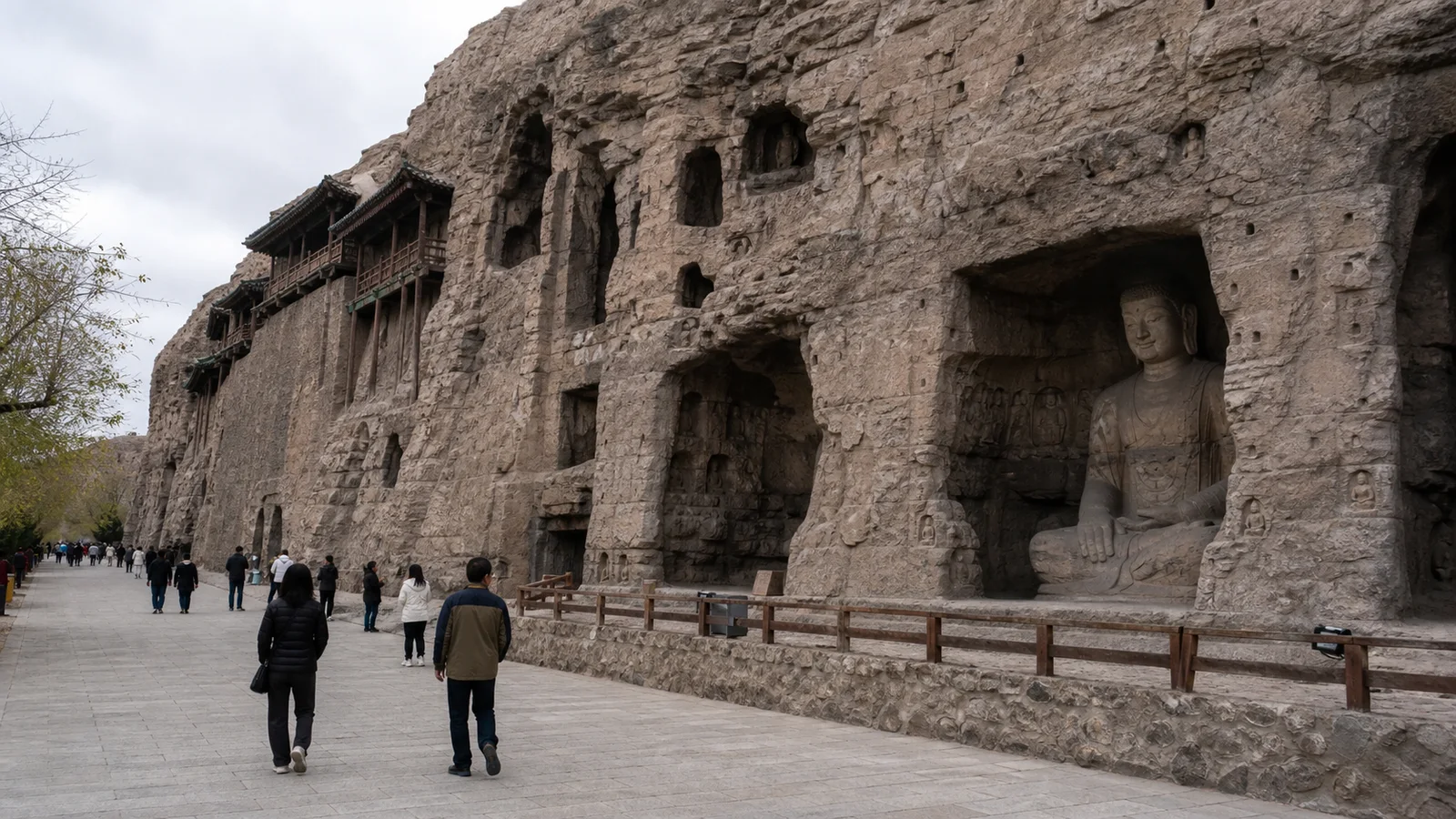
Base in Datong, spend one measured day among Yungang’s painted caves, then cross the Shanxi landscape for the Hanging Temple without gambling on a single overloaded excursion.
Choose the experience before the transport. Tickets, gates and vehicles should support the day you want, not force the group through a generic route.
Datong is easier than it looks on the map
High speed rail and flights have made Datong a practical northern China stop. The city works between Beijing and Shanxi routes, but the main attractions spread in different directions. Yungang lies west of the center. The Hanging Temple is far to the southeast near Hunyuan. Keeping one Datong hotel and using a private vehicle reduces repeated luggage moves.
Arrive the evening before if possible. A quiet dinner and early night protect the first cave morning. Datong’s reconstructed walls and old city streets can provide an evening walk, but the heritage outside the center should remain the priority.
Give Yungang a full morning
The caves extend along a sandstone cliff and trace major developments in fifth century Buddhist art. Begin with the historical introduction, then move through the cave sequence instead of walking directly to the largest image. Timber facades, surviving pigment and the relationship between sculpture and architecture become clearer when the visit follows the site’s order.

Color is part of the story
Many visitors expect bare stone and are surprised by traces of blue, red and green. Some color belongs to later repainting, while other details reveal older decorative systems. A trained guide can distinguish periods without pretending every surface is unchanged. Respect low light and photography restrictions because pigments and interiors are vulnerable.
Allow three to four hours for the principal caves and museum context. Winter can be extremely cold, while summer sun is strong along exposed sections. The path is generally manageable, yet there is more standing than a quick online gallery suggests.
Start the Hanging Temple day early
The road from Datong takes the journey into a drier mountain landscape. Leave early because the temple is small and visitor capacity may be tightly managed. Entry to the broader scenic area and access onto the structure can follow different controls. Carry passports and use the exact booking information provided for the date.
What the photograph does not show
The Hanging Temple is smaller than many wide angle images imply. Its achievement lies in how halls and walkways occupy the cliff, supported by beams anchored into rock and a carefully chosen sheltered position. Narrow stairs and railings are not ideal for every traveler. Anyone uncomfortable with height can appreciate the architecture from established viewpoints below.
Add one stop only when it improves the route
Wooden Pagoda in Yingxian can be linked to a wider regional day, but doing so adds distance and another major monument. Build it in only with an early start and current opening checks. Otherwise, return through Hunyuan for lunch and preserve time in Datong. The purpose of a private vehicle is not to fill every minute. It is to make the chosen places easier to experience.
Questions travelers ask
How many days do I need in Datong?
Two days covers Yungang Grottoes, the Hanging Temple and some city time at a comfortable pace. Add a third day for more temples or a slower architectural route.
Can I enter the Hanging Temple itself?
Upper access can depend on capacity, maintenance, weather and ticket controls. Confirm the current rule close to travel and treat the valley viewpoint as part of the visit.
Is Yungang suitable for children?
Yes. The large caves and visible color are engaging, but families should keep the visit focused and explain that the carvings are protected heritage, not surfaces to touch.
Current information to check
Review UNESCO Yungang Grottoes listing. Opening hours, ticket channels, route controls and weather procedures can change, so reconfirm them close to travel.