
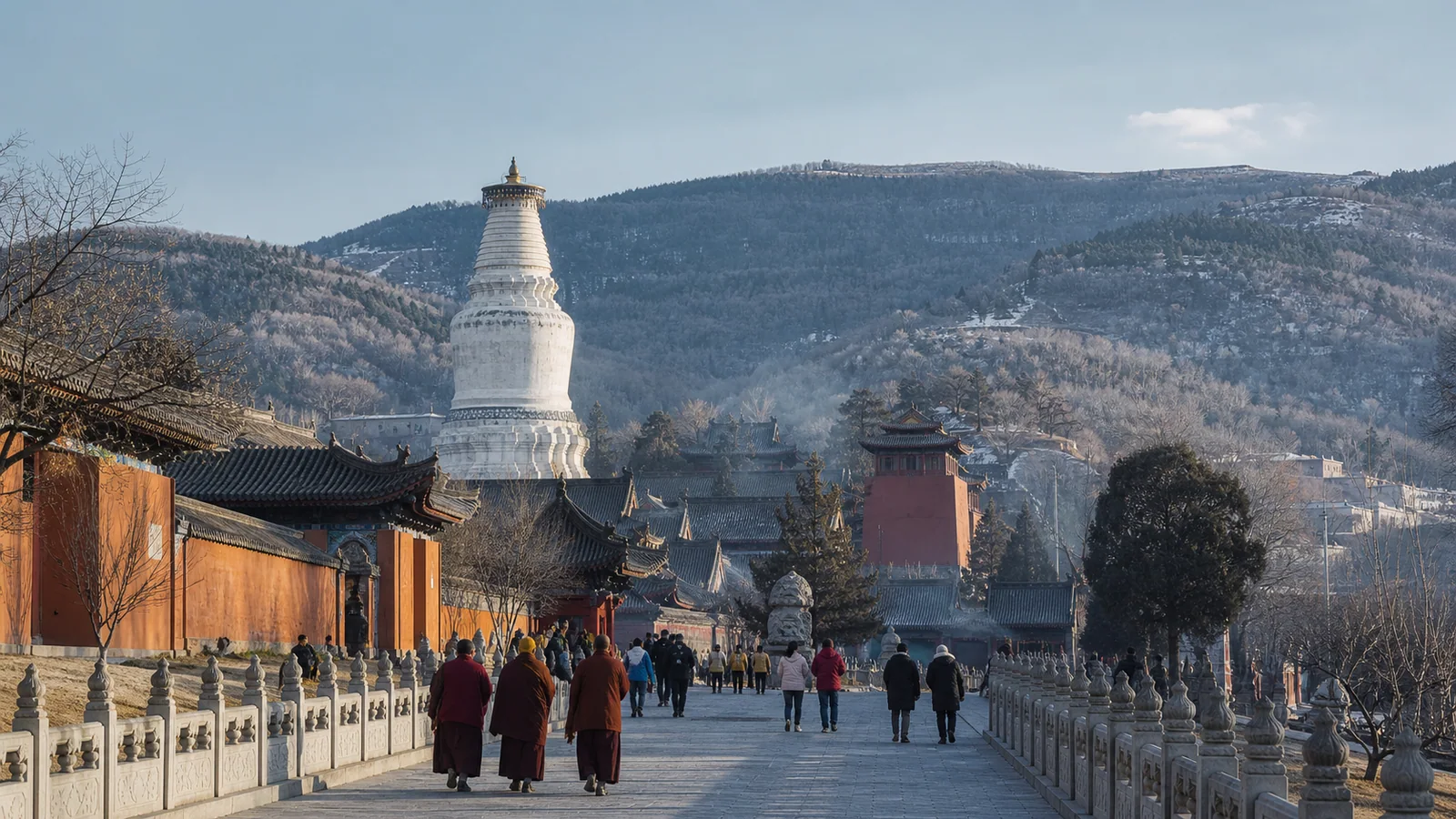
Mount Wutai is not one temple or one photograph. Two days reveal a living Buddhist center, a high mountain climate and some of China’s most important timber architecture.
Choose the experience first. Tickets, routes and vehicles should support the journey you want, not force everyone through a generic schedule.
Approach Wutai as a living sacred place
Mount Wutai is associated with Manjusri and has drawn Buddhist communities and pilgrims for centuries. Monasteries are active religious spaces, even when they also receive large visitor groups. Dress simply, keep voices low, follow photography signs and never block a worshipper for a portrait. A guide should explain practice without turning monks into performers.
The name refers to five broad peaks around the central valley. A first visit does not need to drive to every summit. Weather, road controls and distance make that a separate pilgrimage project. Two days are better spent understanding the Taihuai core and one thoughtfully chosen outer temple.
Day one: the Taihuai temple sequence
Begin near the Great White Pagoda and move through a small group of major monasteries selected for history and current access. The temples climb hillsides, so stairs accumulate quickly. Pause for a vegetarian lunch where appropriate and leave time to observe the valley rather than entering every gate. An early start gives worshippers more space and improves parking conditions.

Day two: travel outward for ancient architecture
Foguang Temple is celebrated for the East Hall and its surviving Tang dynasty architecture, sculpture and setting. It lies away from the busy central valley and requires a specific road plan. Current access, opening hours and conservation restrictions must be checked before departure. Nanchan Temple is another exceptional early timber site, but combining both may create a long road day.
At a conserved hall, do not expect bright lighting or unrestricted photography. The quiet proportions, brackets and aged timber are the experience. A knowledgeable architecture guide can make one hour here more memorable than a full day of unexplained temple names.
Pack for altitude in every season
Wutai is colder than Taiyuan and can change quickly. Summer mornings still need a layer, while winter roads and temple steps may be icy. Bring sun protection, water and footwear with grip. Travelers arriving directly from a hot city sometimes underestimate the evening cold. Weather can close peak roads even while the central valley remains open.
Pilgrimage dates require patience
Religious festivals and public holidays bring serious traffic and accommodation pressure. Reserve early and avoid promising an exact drive time through the core. A nearby hotel allows walking to several sites and reduces daily vehicle movement. Guests who value silence should travel outside the busiest calendar periods and enter temples early.
Use the vehicle for distance, not every doorway
A private car or MPV is valuable from Taiyuan, Datong or the rail connection, and essential for carefully chosen outer temples. Inside Taihuai, walking can be more efficient than repeated parking. Confirm the vehicle permit and current traffic scheme. The driver should know whether the final day ends at an airport, station or another Shanxi heritage site.
Questions travelers ask
How many days do I need at Mount Wutai?
Two days gives a strong introduction to Taihuai and one outer temple. Add time for peak pilgrimage routes or deeper study.
Can I visit Mount Wutai from Taiyuan in one day?
It is possible but very long. One or two nights near Taihuai protect the early morning and reduce road pressure.
Is Foguang Temple inside the main scenic center?
No. It requires a separate road journey and current access confirmation.
Current information to check
Review UNESCO Mount Wutai listing. Opening hours, ticket rules, route controls and weather procedures can change, so confirm them again close to travel.