
Risk Controls for VIP Ground Transport
Board-level travel calls for clear protocols. We coordinate passenger, vehicle and driver details in writing, plan discreet routing, and use secure payment links so your team can follow its own corporate policy.
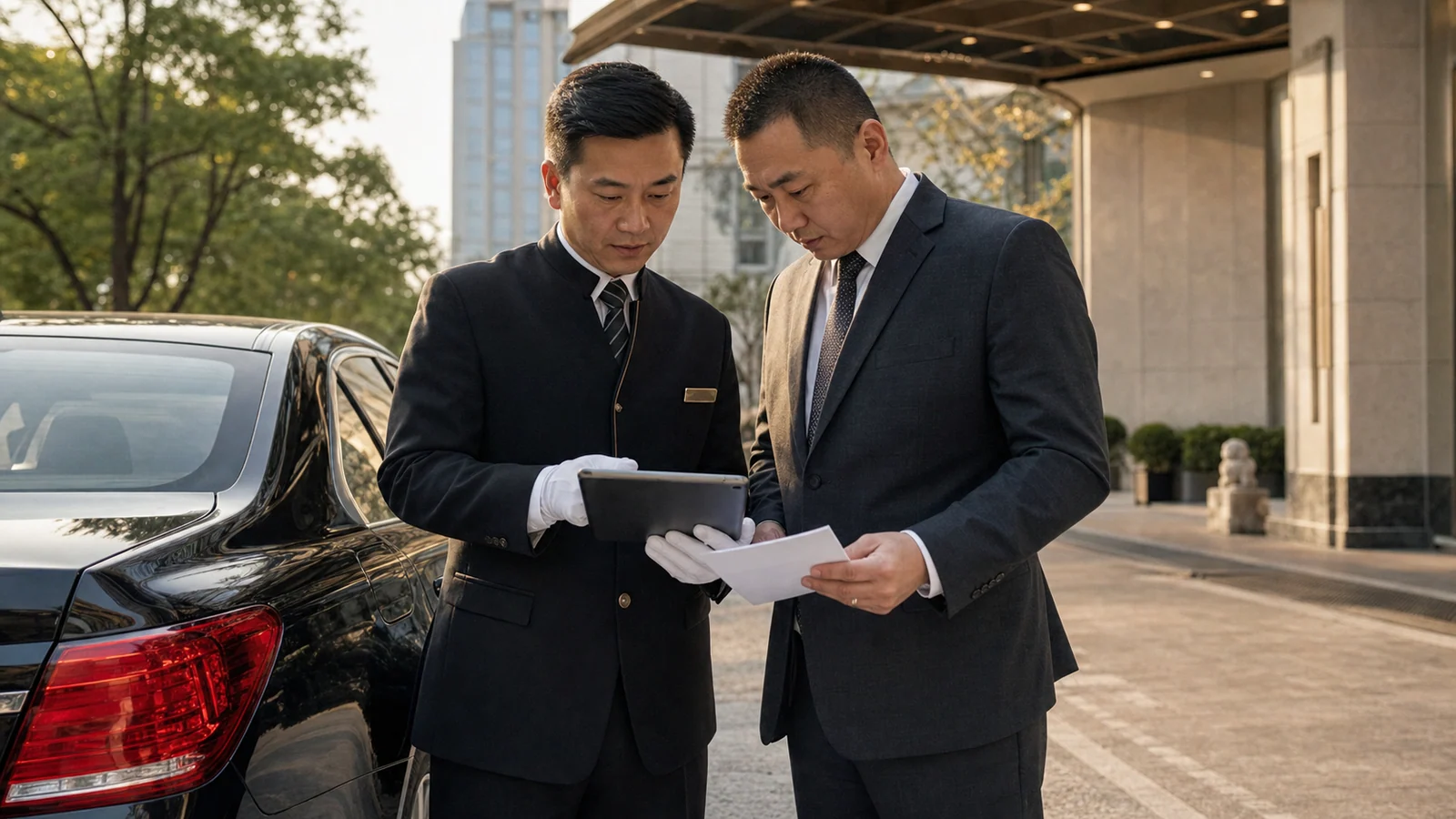
Good ground transport control begins before dispatch
Reliable VIP transport is not created by a luxury badge. It comes from accurate passenger information, a verified vehicle, a reachable chauffeur and an operations team that knows what to do when the schedule changes. The control plan should be proportional to the journey rather than copied from a generic security checklist.
A simple airport transfer needs the flight, terminal, passenger contact, luggage and destination. A board roadshow needs building access, multiple vehicles, decision authority, confidentiality rules and recovery time between commitments.
Passenger, vehicle and driver verification
Match the passenger name, chauffeur name, vehicle registration and phone before pickup. For a delegation, allocate passengers to vehicles in advance. Last minute changes create luggage mistakes and can separate a principal from the assistant carrying the documents.
The requested vehicle class, seating and luggage capacity should appear in writing. If a substitute becomes necessary, operations should explain it and obtain approval rather than quietly sending a smaller or materially different vehicle.
Route and timing controls
Use live traffic information and local driver judgment, but avoid claiming that any route is guaranteed. Road closures, weather, police activity and venue instructions can override the plan. Build time from the must arrive deadline backward and protect the critical movements with a buffer.
For airports and trains, share the transport number because it identifies the real terminal, station and timing. For offices, send the tower, entrance and host contact. A street address may lead to a loading bay that does not accept guests.
Communication and change authority
Nominate one coordinator who can approve route changes, overtime and additional vehicles. Too many dispatch voices create contradictory instructions. The chauffeur should focus on safe driving, while the dispatcher manages the wider itinerary and updates the client.
Use concise messages that state the vehicle, passenger, location and requested action. Keep sensitive schedules out of large group chats. If the principal changes plans directly with the chauffeur, the dispatcher should be informed so the next movement remains connected.
Fallbacks that are actually usable
A fallback is not a second route copied into a document. It must be possible at the relevant time. For important events, consider a backup contact, a replacement vehicle process and an alternate pickup point that the passengers understand.
When several vehicles are operating, one late car should not stop the whole delegation. Decide which passenger, meeting or luggage movement has priority. Record incidents after the service and improve the next day instead of hiding the problem.
Privacy, belongings and duty of care
Passengers should keep passports, money, devices and confidential papers with them. Do not leave sensitive material in an unattended vehicle unless a specific custody arrangement has been confirmed. Child seats, mobility requirements and medical considerations must be shared early enough to prepare correctly.
Professional chauffeurs follow applicable road rules and venue instructions. A client schedule never justifies unsafe driving or an illegal stop. The strongest control culture gives the driver permission to choose safety when time pressure increases.
Questions for the booking review
Who can change the itinerary?
The booking should name an authorized coordinator and an alternate contact.
What happens if the confirmed vehicle has a problem?
The provider should explain the replacement process and communicate any material substitution.
How is a missed pickup prevented?
Confirm the exact meeting point, live passenger number, chauffeur identity and dispatch contact before the movement.
Can travel risk be eliminated?
No. Good planning reduces avoidable failure and improves recovery, but it cannot remove traffic, weather, authority decisions or every unexpected event.
- Identity: passenger, chauffeur, vehicle registration and phone matched in writing before pickup, and shared only with the people who need them.
- Routing: hotel and tower entry points confirmed in advance where the venue allows; alternative routes considered for weather or police checks.
- Payment: secure Airwallex payment links; card details are entered with Airwallex and not stored by us; invoices issued in English.
- Privacy: details are shared only with the suppliers who need them to deliver your journey, as set out in our Privacy Policy.