
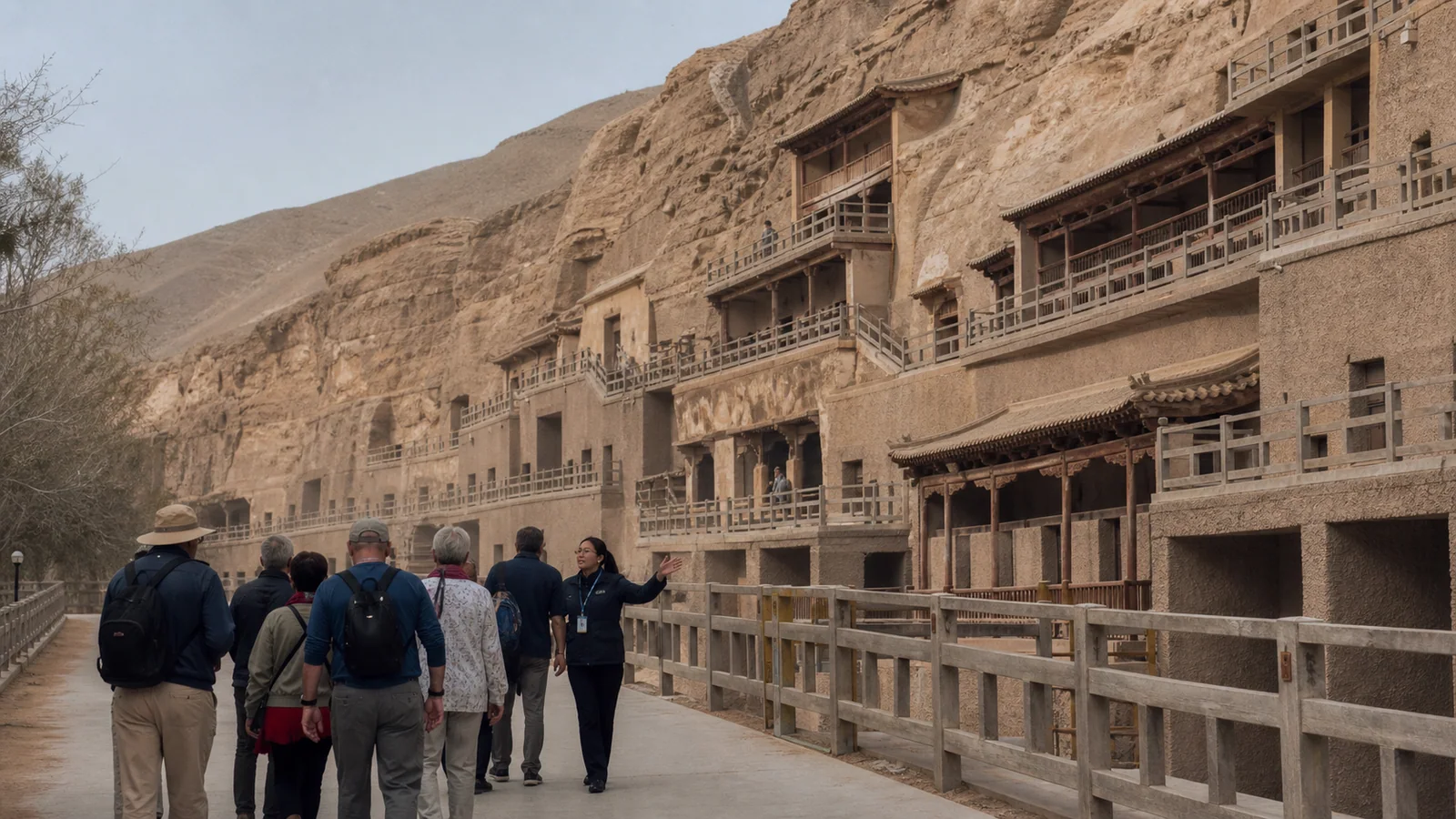
Dunhuang is not a quick desert photograph. Three measured days connect the Mogao Caves, the living city, the dunes and the long Silk Road landscape around them.
Choose the experience first. Tickets, routes and vehicles should support the journey you want, not force everyone through a generic schedule.
Build the journey around the Mogao reservation
Reserve the Mogao Caves before fixing the rest of the itinerary. Entry is controlled, passport details must match the traveler, and different ticket products may include different cave groups or a digital presentation. Popular sessions can sell out long before a public holiday. A resale listing that simply says Mogao ticket is not enough. Confirm the session, language arrangement, meeting place and the exact document required for collection or entry.
Photography is restricted inside the decorated caves because light and crowd movement affect fragile paintings. Put the phone away when instructed and listen to the explanation. The value of the visit lies in the pigments, stories and changing artistic styles, not in returning with a blurred image taken against the rules.
Day one: arrive slowly and understand the place
Use the first day for the Dunhuang Museum, the city market and a calm introduction to Silk Road geography. The museum makes the next morning far more meaningful because travelers can see how trade, religion and migration met at this oasis. In the evening, eat locally and sleep early. A late flight followed by a sunrise desert session often looks efficient on paper and feels miserable in practice.

Day two: Mogao Caves and the desert at golden hour
Allow the cave visit to set the pace. Transport may begin at a visitor center before reaching the protected site, so do not schedule another fixed activity immediately afterward. Have lunch, rest, then enter Mingsha Mountain later in the day when the dunes gain shape and the temperature becomes kinder. Walk to Crescent Moon Spring, climb only as high as the group enjoys and stay for the changing light.
Camel rides and other desert activities are optional. Choose them only after checking the current operation and safety conditions. Wind can transform visibility quickly. Closed zones protect both visitors and the dunes, and there is no reason to cross a barrier for a photograph that hundreds of people already have.
Day three: choose one Silk Road direction
A western route toward Yumen Pass and the eroded landscapes beyond shows the scale of ancient travel, but the road is long and the sites are spread apart. A shorter cultural day can focus on local art, the White Horse Pagoda and unhurried time in Dunhuang. Travelers continuing through Gansu may instead use the day to move toward Jiayuguan. Pick one direction rather than collecting distant names through a vehicle window.
Heat, cold and honest expectations
Spring and autumn are comfortable but can be windy. Summer needs a midday rest, water and sun protection. Winter is quiet and sharply beautiful, yet some services reduce their hours. Desert nights can be cold even after a warm afternoon. Pack layers and protect cameras from fine sand. A clean route always leaves room for weather to change the order.
Why private planning matters here
The distances outside central Dunhuang are the hidden part of the trip. A private vehicle connects the correct Mogao check in point, hotel, dunes and remote western sites without turning every transfer into a negotiation. A guide adds context inside permitted areas, while the chauffeur manages the road and waits at the confirmed exit. Share flight times and ticket sessions first so the plan is built from real anchors.
Questions travelers ask
How many days are enough for Dunhuang?
Three days is the most balanced first visit. It allows one complete Mogao session, the desert in good light and either a museum day or a longer Silk Road excursion.
Can I buy Mogao Caves tickets on arrival?
Sometimes, but popular dates and preferred sessions can sell out. Reserve with the passport you will carry and confirm exactly what the ticket includes.
Is Crescent Moon Spring worth visiting?
Yes, especially early or late in the day. It combines the spring, dunes and changing desert light in one accessible landscape.
Current information to check
Review UNESCO Mogao Caves listing. Opening hours, ticket rules, route controls and weather procedures can change, so confirm them again close to travel.