
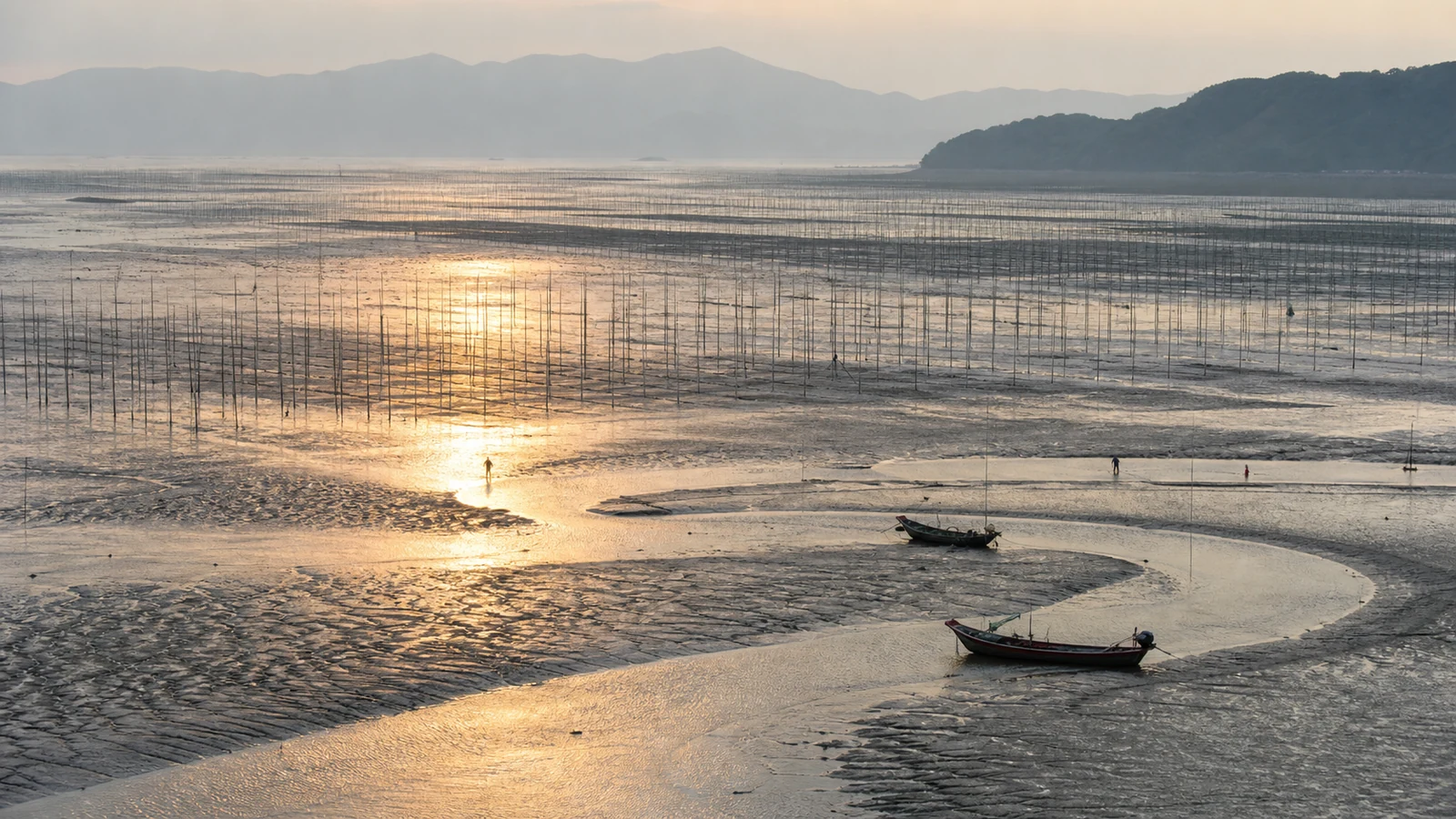
Xiapu is often described as a beach destination. That is the wrong picture. Its most memorable landscapes are working tidal flats shaped by water, mud, bamboo poles, seaweed farms, fishing boats and the daily decisions of coastal villages.
The county sits on the coast of northeastern Fujian. Photographers come for the way narrow channels catch light between exposed flats and for the repeating lines of aquaculture. The famous viewpoints are not one connected promenade. Beiqi is close to the county town. Dongbi, Xiahao and Huazhu sit along the Sansha coast. Shajiang is a separate southern journey.
A list that places them all in one day ignores distance, tide and human energy. Three days is short enough to feel focused and long enough to wait for one good morning.
Build the route from the tide, not the names
At high water, the sea covers much of the mud and turns channels into broad reflective surfaces. As the tide falls, lines, ridges and working paths emerge. At low water, the geometry can become stronger but boats may sit still and reflections may disappear. Neither condition is always better.
The useful question is not simply, “What time is sunset?” Ask what the water will be doing before, during and after sunset at the specific place. A moderate incoming or outgoing tide may reveal curved channels while keeping enough water to catch light. The exact preference changes by viewpoint and season.
Use a current local tide table and confirm it with someone who understands the coast. Tide times for a nearby port are guidance, not a guarantee that every creek around Xiapu fills at the same minute.
Never promise a famous frame. Boats follow work, not your camera. Seaweed structures change with the season. Cloud may hide the sun. A strong Xiapu plan creates chances instead of pretending nature has accepted a reservation.
Day one: arrive and understand Dongbi
Take a high speed train to Xiapu Station and meet your driver at the exit. If the arrival is around midday, continue toward the Sansha coast and check in near Dongbi. This places you close to the best known sunset area and reduces the final drive after dark.
Spend the afternoon learning the coastline rather than rushing to several pins. Dongbi village sits above the sea, with homes and guesthouses facing tidal water, aquaculture and layered headlands. The official provincial coverage describes it as a cliffside village known for sunset and coastal light.
Reach the viewpoint well before the sun lowers. The best position is not always the most crowded platform. Walk the public coastal path, observe where the water lies and choose one composition. After sunset, wait. Blue light can separate the village, boats and water more gently than the last bright minute.
Day two: Huazhu sunrise, Xiahao and a real rest
Huazhu sunrise
Leave while the village is dark. Huazhu faces the open coast and is known for sunrise. On a clear morning, distant islands form layers beneath the sky. On a cloudy morning, watch for fishing movement and soft color instead of waiting only for a visible sun.
Breakfast and no camera
Return for a proper breakfast. Early photography becomes unpleasant when every hour is filled. Charge batteries, clean salt from lenses and sleep if needed.
Xiahao tidal flats
Choose the side of the village that suits the current light and water. Xiahao is valued for layers of sand, mud and shallow channels. Conditions can look completely different within one tidal cycle.
Second sunset chance
Return to Dongbi or use another nearby public viewpoint selected for cloud and tide. The second chance is the reason this route stays on the north coast for two nights.
Day three: Beiqi or Shajiang, chosen for conditions
Do not force both places into their perfect light on the same morning. Beiqi is near Xiapu town and works naturally before a later train. Its elevated views show broad flats, bamboo poles, sinuous water and people crossing the mud at great distance.
Shajiang S Bay requires a dedicated drive south. It is known for curving channels between dense aquaculture structures, often seen from an elevated position near the village. Choose it when the tide suits the channel pattern and your departure leaves enough time.

If your priority is a relaxed departure, choose Beiqi and return to the hotel for breakfast. If the photography matters more than an early train, choose Shajiang and book a later departure or another night. The itinerary should admit what time allows.
What changes through the year
Xiapu is not visually constant. Aquaculture cycles alter the number and density of poles, nets and boats. Rainy periods bring atmosphere but can remove the horizon. Hot summer days may produce haze and strong humidity. Typhoon warnings can stop coastal movement completely.
Autumn can bring clearer air and active seaweed scenes in some areas. Winter light may be crisp, but wind feels colder on exposed viewpoints. Spring offers mist and softer color, with a higher chance of rain. Ask what is happening on the coast during your exact dates instead of choosing a season from one image.
Major public holidays change the human landscape too. Platforms fill early, parking slows and rooms in popular villages can become expensive. A private driver still helps, but it cannot create an empty viewpoint. Travel on ordinary weekdays when possible.
A note about Yangjiaxi and staged photographs
Yangjiaxi is inland from the main coast and known for old banyan trees. Some famous photographs show light rays, smoke, a farmer and an ox beneath the trees. These scenes are often arranged for groups of photographers. The setup can be beautiful, and the people involved are doing paid work. It should simply be understood honestly.
Go if you enjoy constructed photography and accept the fee and timing. Skip it if your purpose is candid village life. A local itinerary becomes stronger when it matches your values, not when it includes every viral image.
What to bring without carrying a studio
A medium telephoto lens is often more useful than an extreme wide angle because much of the activity is far below the viewpoints. A wider lens still helps for the complete coastline. Bring a lens cloth, spare battery, rain cover and stable travel tripod if you use slow exposures.
Salt air reaches equipment even when the sea looks calm. Keep unused lenses in the bag and clean gear at the hotel. Wear shoes with grip and do not walk onto working mudflats unless a legitimate local route permits it. Channels fill, mud can trap a foot and aquaculture structures are private working equipment.
For phones, use the standard camera first. Strong digital zoom destroys the small details that make Xiapu interesting. A clean lens and careful exposure produce more than a stack of filters.
What private transport solves
Good light begins before ordinary transport is convenient. The north coast viewpoints are spread through villages and coastal roads. Shajiang lies in another direction. A dedicated driver can leave before dawn, keep dry clothes and equipment secure and change the next stop when tide or cloud makes the original plan weak.
The vehicle should be comfortable, not showy. A sedan works for one or two photographers with compact bags. A van is better for several tripods, larger cases or a family that wants more room between early starts. Tell us the real equipment size before the car is assigned.
A driver knows the roads and meeting points. A local photography guide adds tide judgment, platform knowledge and communication with coastal communities. Serious photographers should consider both roles, especially when only three days are available.
Is Xiapu worth it without a large camera?
Yes, if you enjoy coastlines, seafood, village stays and slow observation. The route can be gentler for couples or families. Keep one sunrise, one sunset, a long lunch and a coastal walk. Remove the repeated viewpoint changes.
It is less suitable for someone expecting swimming beaches, resort service or famous monuments. Xiapu’s appeal is subtle. You watch water return across mud, a boat enter a channel and a working coast change in front of you.
Frequently asked questions
How many days do I need?
Three days gives you two sunset chances, at least one sunrise and one separate tidal route without making every hour a transfer.
Where should I stay?
Stay around Dongbi or Sansha for the north coast, or in Xiapu town for station convenience. The right answer depends on the first light plan.
Is Dongbi always best for sunset?
It is the clearest first choice, but cloud and water can make another nearby viewpoint more useful on a specific day.
Can I photograph working fishermen?
Photograph from public viewpoints with respect. Ask before close portraits or entering work areas. Do not interrupt boats, nets or access paths.
Are the viewpoints free?
Access arrangements vary. Some public viewpoints may be open while certain platforms, village areas or arranged scenes charge a fee. Confirm locally.
Can you plan around the tide?
Yes. We can combine current tide guidance, sunrise and sunset, hotel location, a local guide and a dedicated vehicle.
Current information to check
The Ministry of Culture and Tourism describes Xiapu’s photography points and coastal tourism. Fujian government sources cover the official Light Route 1 through Huazhu, Xiahao and Dongbi and the current development of Dongbi village. Use China Railway 12306 for current train information and confirm tide, weather and local access before departure.